 English
 Deutsch
 русский
 español
 português
 Nederlands
 العربية
 हिंदी
हिंदी



Commercial caramel popcorn production requires more than popcorn kernels and sugar. Manufacturers need the right combination of popping corn, caramel coating ingredients, cooking oil, and carefully controlled heating to produce popcorn with a consistent flavor, even coating, and crisp texture.
The exact recipe depends on the product you want to make. A small gourmet popcorn shop may use a ready-made caramel coating sugar, while a large snack food factory may prepare caramel according to a controlled recipe and apply it using an industrial caramelizer. For businesses sourcing ingredients and equipment together, XFD Popcorn offers popcorn ingredients, caramelizing equipment, and industrial production solutions.
Here is a practical guide to the main ingredients used in commercial caramel popcorn and how each one affects the finished product.
What Are the Main Ingredients in Commercial Caramel Popcorn?
The core ingredients are popcorn kernels, sugar or caramel coating sugar, and cooking oil. Depending on the recipe and production method, manufacturers may also use butter or other fats, glucose syrup, salt, and additional flavoring ingredients.
Each ingredient serves a different purpose. Popcorn kernels provide the base, sugar creates the sweet caramel flavor, oil supports popping or coating, and optional ingredients help adjust taste, color, texture, and handling properties.
For commercial buyers, the important question is not simply which ingredients to use, but how those ingredients work together under the actual production conditions.
Popcorn Kernels: The Foundation of the Product
Popcorn kernels determine the shape, expansion, texture, and overall appearance of the finished product. For caramel popcorn, manufacturers generally select popping corn that produces a suitable shape and enough surface area for the caramel coating to adhere.
Kernel moisture, size, storage conditions, and popping performance all affect production results. Kernels that pop inconsistently can create too many unpopped grains, increase waste, and make it harder to maintain a uniform batch.
When evaluating a commercial popcorn recipe, test the kernels with the intended popping equipment rather than choosing them by price alone. The right combination should provide reliable popping performance and a finished shape that works well with the selected coating process.
Businesses producing flavored popcorn at a larger scale can explore XFD's industrial popcorn machines and production lines to understand how popping and downstream coating equipment can be integrated into a production workflow.
Caramel Coating Sugar: The Key to Caramel Flavor
Sugar is the main ingredient responsible for caramel popcorn's sweet taste and characteristic caramel profile. Depending on the recipe, manufacturers may use granulated sugar, a prepared caramel mixture, or a ready-made caramel coating sugar designed specifically for popcorn.
For commercial operations, ready-made coating sugar can simplify ingredient handling and reduce the number of separate components that operators need to measure. It can also make it easier to repeat a product's flavor profile across production batches when used according to the supplier's instructions.
XFD offers Caramel Powder for Popcorn Coating Sugar, a caramel-flavored coating ingredient intended for popcorn shops and factories. The product is supplied in 5 kg food-grade plastic bags and is described by XFD as a ready-to-use option for making caramel popcorn.
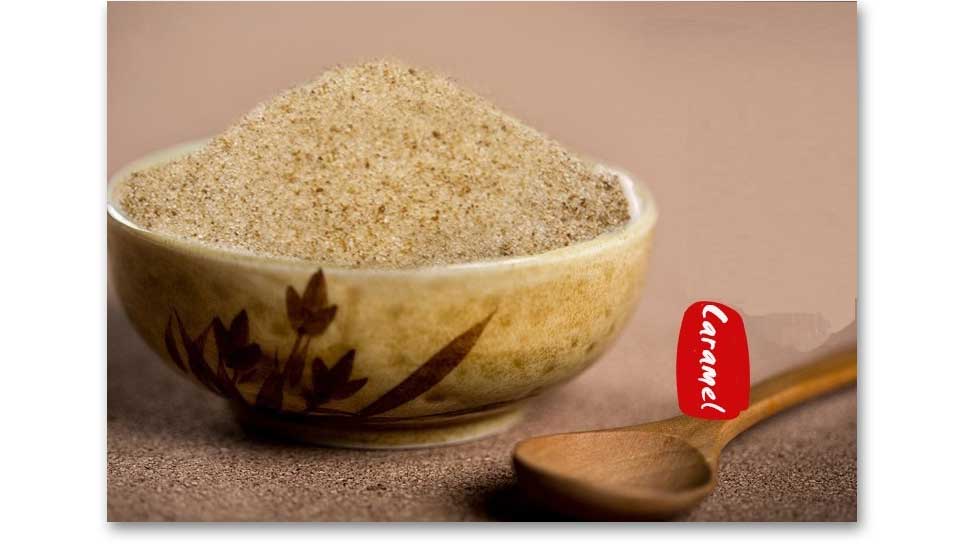
The choice between a prepared caramel coating ingredient and a custom sugar recipe depends on the desired flavor, equipment, production volume, and level of recipe control. Before placing a bulk order, confirm the recommended usage rate, ingredient declaration, allergen information, storage conditions, and suitability for your target market with the supplier.
Cooking Oil: Supporting Popping and Coating
Cooking oil can serve different purposes in caramel popcorn production. During popping, it transfers heat to the kernels and contributes to the eating quality of the popcorn. In some recipes and processing methods, fat is also part of the caramel mixture or coating system.
Common options in popcorn production include coconut oil and palm-based oils. The appropriate choice depends on the popping equipment, flavor requirements, processing temperature, cost, and local food regulations.
Not every caramel popcorn recipe uses oil in exactly the same way. For example, a process that prepares caramel separately may handle the popping oil and caramel ingredients in different stages. A prepared coating sugar may have its own operating instructions, so manufacturers should follow the product-specific recipe rather than assume that every formulation needs the same oil ratio.
To improve consistency, measure oil accurately and keep the ingredient ratio stable during production trials. Excess oil may affect the final mouthfeel or make coating performance more difficult to control, while an unsuitable oil can alter flavor and processing behavior.
Butter, Fat, and Other Caramel Ingredients
Some caramel popcorn formulations include butter or other fats to create a richer flavor and a fuller mouthfeel. The type and quantity of fat affect the caramel mixture's behavior during heating and its interaction with the popcorn.
Commercial recipes may also use glucose syrup or other approved sweeteners to adjust the caramel's handling properties and finished texture. However, these ingredients are not mandatory in every formula. A ready-made caramel coating sugar may already contain a blend of ingredients intended to produce a particular flavor profile.
When developing a custom formula, manufacturers should evaluate ingredient compatibility, heating behavior, coating coverage, and finished-product stability together. Changing one component can affect several other properties, so recipe adjustments should be tested in small batches before full production.
Salt and Optional Flavoring Ingredients
A small amount of salt can balance sweetness and make caramel flavor more pronounced. Some brands also add vanilla flavoring or other permitted flavor ingredients to create a distinctive product.
These additions should support the intended flavor rather than overwhelm the caramel. For a standard caramel popcorn product, start with the core recipe and adjust optional ingredients gradually through controlled tasting and production trials.
Businesses that plan to expand beyond caramel can also explore XFD's popcorn ingredients and flavoring products. The category includes caramel, chocolate, and other flavored coating ingredients, giving commercial operators options for developing a broader popcorn menu.
Before using any flavoring ingredient, confirm its intended application, recommended dosage, ingredient documentation, and compliance with the food regulations in the country where the popcorn will be sold.
How Do Ingredient Choices Affect Caramel Popcorn Quality?
Commercial caramel popcorn quality depends on more than sweetness. The finished product should have a balanced flavor, consistent coating, suitable crispness, and a texture that remains acceptable during storage.
- Coating coverage: The caramel mixture must distribute evenly across the popcorn rather than collect in a few heavily coated areas.
- Sweetness and flavor: Sugar, fat, salt, and flavoring ingredients should work together to create a repeatable taste.
- Texture: Moisture, caramel preparation, cooling, and packaging all influence whether the popcorn stays crisp.
- Batch consistency: Stable ingredient ratios and controlled processing help reduce differences between production runs.
- Storage performance: The finished popcorn needs suitable packaging and storage conditions to limit moisture pickup and protect product quality.
If caramel popcorn becomes sticky, the cause may be moisture exposure, insufficient drying or cooling, an unsuitable formulation, or packaging that does not adequately protect the product. Simply adding more sugar will not necessarily solve the problem.
For this reason, ingredient testing should include the finished product after cooling and, where relevant, after a period of storage. This gives manufacturers a more useful picture of actual commercial performance than judging the product immediately after coating.
How Are Ingredients Used in Commercial Caramel Popcorn Production?
The production method depends on whether caramel is prepared separately, cooked directly in a dedicated caramelizer, or applied through an integrated production line. A typical workflow includes the following stages:
- Ingredient preparation: Check the kernels, coating sugar, oil, and any optional ingredients. Measure each component according to the approved recipe.
- Popping: Pop the kernels using suitable commercial or industrial equipment and remove unpopped kernels where required.
- Caramel preparation: Prepare the caramel mixture or use the selected coating ingredient according to its operating instructions.
- Coating: Mix the popcorn with the caramel while controlling temperature, mixing speed, and coating distribution.
- Cooling: Cool the coated popcorn under appropriate conditions so that the coating can set before packaging.
- Packaging: Pack the finished product in suitable moisture-protective packaging and store it under the recommended conditions.
For small retail businesses, a compact machine may be sufficient. For larger factories, combining popping, caramelizing, mixing, cooling, and packaging equipment can help organize production and reduce unnecessary manual handling.
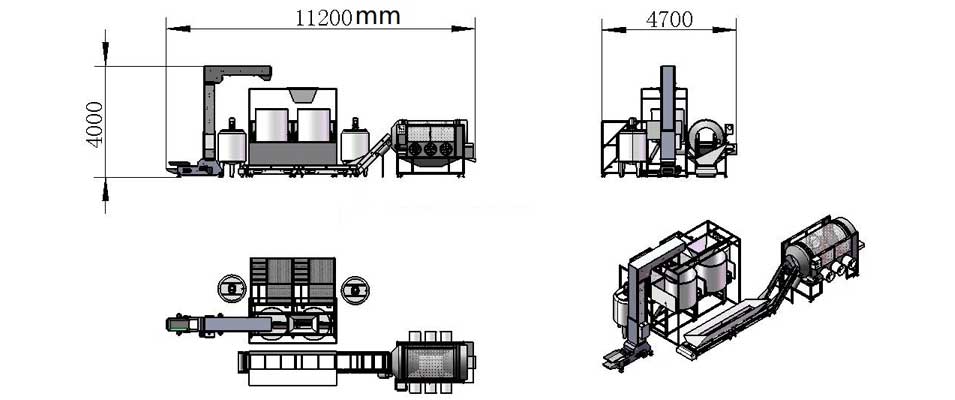
XFD's industrial popcorn cooker and coater combines cooking and mixing functions for factory production. Its product information describes automatic feeding, adjustable digital temperature control, and a mixing system designed to improve coating efficiency. These functions can help manufacturers manage the caramelizing stage more consistently, although the final results still depend on the recipe and operating conditions.
For higher-volume operations, XFD also provides industrial popcorn production line solutions. The appropriate setup should be selected according to the required output, caramel recipe, cooling requirements, available floor space, and packaging process.
How Should Manufacturers Choose Commercial Caramel Popcorn Ingredients?
The best ingredient combination is the one that matches the product specification and can be reproduced reliably at the intended production scale. Before selecting a supplier or finalizing a recipe, manufacturers should consider the following points:
- Target product: Define the desired sweetness, caramel intensity, coating thickness, and texture.
- Production method: Check whether the ingredients are compatible with the selected kettle, caramelizer, coater, or continuous production line.
- Ingredient specifications: Request technical data, ingredient lists, allergen information, and recommended storage conditions.
- Repeatability: Test whether the recipe produces consistent results across multiple batches.
- Food safety and compliance: Confirm that the ingredients and labeling meet the requirements of the destination market.
- Total production cost: Consider ingredient usage, waste, labor, energy, packaging, and finished-product yield rather than comparing ingredient prices alone.
For businesses entering the caramel popcorn market, a ready-made caramel coating ingredient may simplify the initial recipe-development process. Manufacturers with specific flavor, texture, or production requirements may prefer a custom formulation, provided they can validate its performance under actual operating conditions.
Working with an equipment supplier that understands both popcorn ingredients and coating processes can also help buyers assess the complete production setup. XFD's combination of popcorn ingredients and commercial or industrial caramelizing equipment provides a starting point for evaluating those requirements.
Frequently Asked Questions About Commercial Caramel Popcorn Ingredients
What ingredients are used in commercial caramel popcorn production?
The main ingredients are popcorn kernels, sugar or caramel coating sugar, and cooking oil. Some recipes also use butter or other fats, glucose syrup, salt, and additional flavorings. The exact formulation depends on the desired flavor, texture, equipment, and production method.
What type of sugar is best for commercial caramel popcorn?
There is no single best option for every manufacturer. Granulated sugar may be suitable for custom caramel recipes, while prepared caramel coating sugar can simplify ingredient handling. The right choice depends on the recipe, processing method, and required finished-product quality.
Can ready-made caramel powder be used for commercial popcorn?
Yes. A caramel coating sugar designed for popcorn can be a practical option for shops and factories. XFD offers a caramel coating product intended for popcorn applications. Buyers should follow the product instructions and confirm the recommended usage rate before production.
Why does commercial caramel popcorn become sticky?
Common causes include moisture absorption, insufficient cooling or drying, unsuitable caramel preparation, and packaging that does not adequately protect the product. Reviewing the full process is usually more effective than changing the sugar quantity alone.
Does commercial caramel popcorn always need butter?
No. Butter or other fats may be included to create a richer flavor, but they are not mandatory in every recipe. Some prepared coating ingredients already contain a formulated blend. Always check the product specifications before adding extra ingredients.
What equipment is used to coat popcorn with caramel?
Depending on production volume, businesses may use a batch caramelizer, a combined popcorn popper and caramelizer, or an industrial cooker and coater. Large-scale operations may integrate popping, coating, cooling, and packaging equipment into a production line.
How can manufacturers keep caramel popcorn crisp?
Control the caramel preparation and coating process, allow the product to cool appropriately, limit exposure to moisture, and use packaging with suitable moisture-barrier properties. Storage conditions and the final recipe should also be validated through product testing.
Where can businesses source caramel popcorn ingredients and equipment?
Businesses can review XFD's popcorn ingredients category for coating ingredients and explore its industrial equipment range for caramelizing and production solutions. Buyers should confirm current specifications, availability, and suitability with the supplier before ordering.


