Categories
New Blog
The texture of caramel popcorn depends not only on the ingredients used, but also on how the caramel is applied to the popcorn. Some coating methods create a thin, light layer that allows the popcorn's original crunch to remain noticeable. Others produce a thicker, more complete caramel shell with a stronger sweetness and a harder bite.
For commercial popcorn manufacturers, choosing the right coating method affects several important product characteristics, including caramel coverage, coating thickness, crispness, stickiness, and kernel separation. The wrong process can result in uneven coating, excessive caramel buildup, broken popcorn, or a finished product that becomes soft during storage.
So, how do different coating methods affect the texture of caramel popcorn? The answer depends on whether caramel is added during popping, cooked and applied in a separate caramelizing process, or distributed through a rotating coating system. Understanding these differences helps manufacturers choose suitable popcorn coating equipment and achieve the texture their customers expect.

Different coating systems create different popcorn textures and flavor distributions.
Caramel popcorn has a different texture from plain or dry-seasoned popcorn because the coating changes the way each popped kernel feels when eaten. The amount of caramel, its moisture content, application temperature, and cooling conditions all influence the final result.
A suitable coating process should achieve several goals:
For example, a product designed for premium retail packaging may require a thicker and more complete caramel layer. A lighter caramel popcorn product may need a thinner coating to maintain a less dense eating experience.
This is why manufacturers should decide on the desired finished texture before choosing a caramel popcorn cooker and coater. The equipment and coating method should match the product requirements rather than being selected only according to machine capacity.
Direct oil popping is a method in which corn kernels, popping oil, and suitable popping sugar or flavor ingredients are processed together in the popping kettle. Instead of applying a separate caramel coating after popping, the flavor develops as the kernels expand.
This process produces a different result from conventional kettle caramelizing. The flavor is integrated into the popping process, while the finished product may have a lighter or less substantial coating than popcorn made with a separate caramelizer.
The final texture depends on the sugar formulation, oil quantity, kernel variety, heating conditions, and popping equipment. When the formulation is properly controlled, manufacturers can produce sweet popcorn with a relatively uniform flavor distribution.
However, direct oil popping has some limitations when a brand wants a visibly thick caramel shell. Since the sugar is processed together with the kernels during popping, it does not offer the same separate coating stage as a dedicated caramelizer.
This method is worth considering for businesses producing flavored popcorn with a relatively simple processing workflow. It is less suitable when the product specification specifically requires a thick, separately applied caramel layer.
Kettle caramelizing is a common method for producing commercial caramel popcorn with a more noticeable coating. In this process, popcorn is prepared first, while caramel ingredients are heated and mixed separately or in a dedicated caramelizing kettle. The prepared coating is then distributed over the popcorn through controlled mixing.
Because caramel is prepared separately, manufacturers have more control over the coating formulation, cooking conditions, and amount of caramel applied to the popcorn.
This method can produce several texture characteristics:
However, kettle caramelizing also requires careful process control. If too much caramel is added, the popcorn may become overly thick, heavy, or difficult to separate. If the caramel is too hot or too fluid, it may distribute unevenly. If the finished popcorn is not cooled properly, the coating may remain sticky.
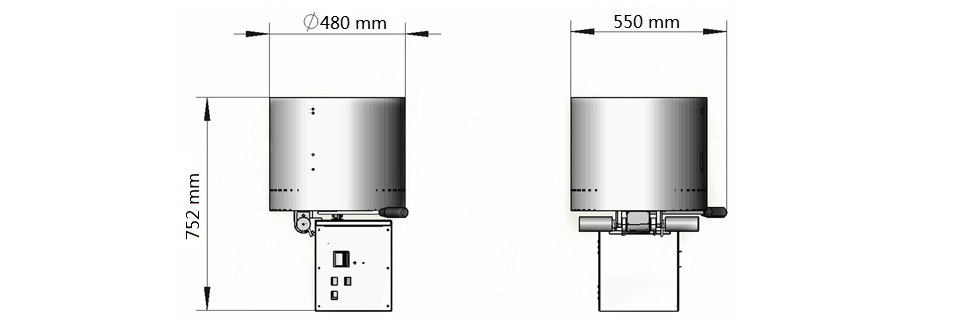
XFD CA-480 caramelizer equipment design for controlled caramel popcorn processing.
XFD's CA-480 caramelizer is designed for this type of processing. Its large mixing baffles help distribute the coating, while the adjustable digital temperature control allows operators to monitor actual product temperature. The machine also features adjustable stirring speed.
These functions are useful when manufacturers need to adjust coating conditions for different caramel formulations. You can learn more about the industrial caramelizer and cooker-coater equipment for larger snack food production requirements.
Drum coating uses a rotating drum to tumble popcorn while coating ingredients are introduced. As the popcorn moves inside the drum, the continuous rolling action helps expose different surfaces of each kernel to the coating material.
This method is particularly useful for dry seasoning powders and suitable liquid coatings. Its main advantage is that it can distribute flavoring across a relatively large quantity of popcorn through continuous movement.
For popcorn texture, drum coating can offer several benefits:
However, a powder coating drum and a heated caramelizer should not be treated as the same machine. A standard powder coating drum is not automatically suitable for thick, hot caramel syrup. Caramel requires equipment specifically designed to handle its temperature, viscosity, mixing, and cleaning requirements.
For factories producing flavored popcorn with dry powders or suitable coating materials, XFD offers industrial coating solutions. Its hot-air popcorn production line with powder coating drum combines popcorn ovens and a large coating drum. The listed configuration has a production range of approximately 90–120 kg/h and can be expanded by adding more hot-air ovens.
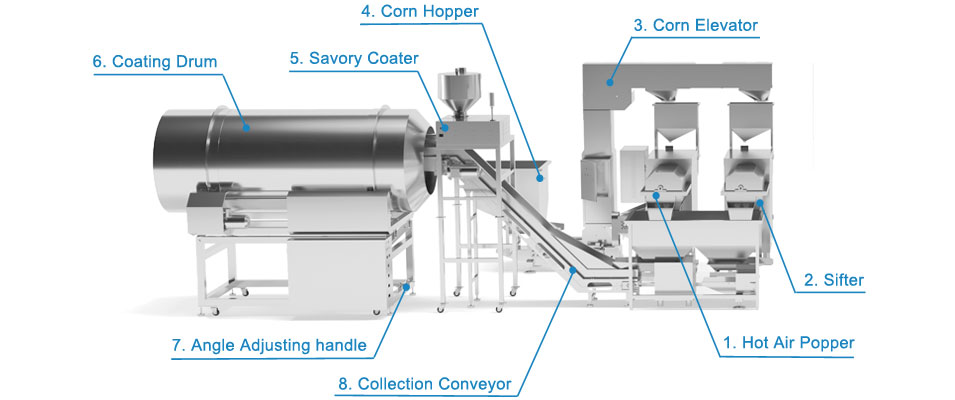
Industrial popcorn line showing the coating drum and connected processing equipment.
A coating tumbler works by rotating a removable bowl or drum so that popcorn continuously moves and turns during the coating process. Depending on the machine design, it can be used with seasoning powders or suitable liquid coating materials.
Unlike a heated caramelizer, a non-heated tumbler does not cook caramel syrup. It is mainly used to distribute coating ingredients over already-popped popcorn.
The texture of the finished product depends on several operating factors:
XFD's CM-400 Coater Mixer Tumbler uses a non-heated removable aluminum bowl. The manufacturer describes its ability to use powder or liquid coating and states that coating can be completed in approximately 3 minutes under the specified operating conditions. Its listed bowl capacity is 5 gallons.
For manufacturers producing flavored popcorn with cheese, strawberry, or other seasoning powders, this type of popcorn coater mixer tumbler can help distribute flavoring without requiring a heated caramel cooking process.
It is important to remember that crispness is not determined by tumbling alone. The moisture content of the popcorn, the type of coating ingredient, and the storage environment also affect the finished texture.
The amount of caramel applied to popcorn has a direct effect on how the finished product looks and feels. A light coating and a heavy coating are designed for different product preferences.
A light caramel coating generally provides a thinner layer around the popcorn. It allows more of the original popcorn texture to remain noticeable and can create a less dense eating experience.
A heavy caramel coating creates a more prominent outer layer. When properly cooked and cooled, it can deliver a stronger caramel flavor and a more pronounced crunchy bite.
| Comparison Factor | Light Caramel Coating | Heavy Caramel Coating |
|---|---|---|
| Coating Thickness | Relatively thin | More substantial |
| Caramel Flavor | Milder | More pronounced |
| Eating Texture | Lighter bite | More noticeable coating crunch |
| Caramel Usage | Lower coating ratio | Higher coating ratio |
| Processing Requirements | Controlled light application | More attention to mixing and cooling |
Neither coating style is automatically better. Manufacturers should consider the target customer, retail positioning, packaging requirements, and desired eating experience when deciding how much caramel to apply.
Even when manufacturers use suitable coating equipment, the final product can still develop texture problems if the operating conditions are not properly controlled.
Some common problems include:
A practical way to improve consistency is to test a small production batch before making major adjustments. Record the caramel ratio, cooking temperature, mixing speed, processing time, and cooling conditions. This makes it easier to identify which factor is responsible for a texture problem.
The best coating method depends on the finished product rather than the machine itself. Manufacturers should first determine whether they want a thin flavored layer, a thick caramel shell, or a more flexible seasoning process.
| Coating Method | Main Texture Result | Suitable Application |
|---|---|---|
| Direct Oil Popping | Flavor integrated during popping; generally a lighter coating effect | Sweet flavored popcorn |
| Kettle Caramelizing | More substantial caramel layer and pronounced crunch | Traditional caramel popcorn |
| Drum Coating | Consistent seasoning distribution through tumbling | Powder-coated flavored popcorn and suitable coatings |
| Tumbler Coating | Controlled surface coverage with powder or suitable liquid materials | Small and medium-batch flavored popcorn production |
For small popcorn shops, a compact caramelizer or tumbler may be sufficient. Businesses producing thicker caramel popcorn can benefit from a dedicated cooker and coater. Larger factories generally need an integrated system that coordinates popping, coating, cooling, and packaging.
XFD offers different equipment configurations for these applications. Its solutions include individual caramelizers, coating tumblers, and industrial popcorn production lines. When evaluating equipment, buyers should compare the coating material, processing capacity, temperature control, mixing performance, cleaning requirements, and downstream cooling capacity.
Cooling is an important part of caramel popcorn production because the coating needs time to set after application. Even if the caramel is distributed evenly, poor cooling can affect the final texture.
If popcorn is transferred into packaging while the caramel is still too warm, individual pieces may stick together. Trapped heat and moisture can also affect the product's texture during storage.
Manufacturers should therefore consider the following points:
For industrial manufacturers, cooling capacity should be matched to the output of the coating equipment. A high-capacity caramelizer will not improve overall production if the cooling stage becomes a bottleneck.
Which coating method produces the crunchiest caramel popcorn?
Kettle caramelizing can produce a thicker and more noticeable caramel shell, which may create a pronounced crunchy bite after proper cooking and cooling. The final texture also depends on the sugar formulation, moisture level, coating thickness, and cooling conditions.
What is the difference between a caramelizer and a popcorn coating tumbler?
A caramelizer is designed to heat, cook, and mix caramel ingredients with popcorn. A non-heated coating tumbler mainly distributes powder or suitable liquid coating materials through rotation. They serve different processing purposes and should not be used interchangeably without checking material compatibility.
Does a thicker caramel coating make popcorn crunchier?
A thicker caramel layer can create a more pronounced crunchy shell after proper setting. However, excessive coating may make popcorn too heavy or sticky. The coating ratio should match the intended product texture.
Why does caramel popcorn become sticky after coating?
Common causes include excessive moisture, insufficient caramel cooking, unsuitable cooling conditions, excessive coating application, and exposure to humid air. Manufacturers should check the cooking endpoint and cooling process before changing the coating equipment.
Can a rotating tumbler be used for caramel popcorn?
Yes, but the coating material and tumbler design must be compatible. A non-heated tumbler is suitable for powder and certain liquid coatings, but thick cooked caramel syrup generally requires a dedicated heated caramelizer or suitable cooker and coater.
How long does popcorn coating take in a tumbler?
The processing time depends on the machine, coating material, loading quantity, and required coverage. XFD's CM-400 product information describes an approximate coating time of 3 minutes under its specified operating conditions.
What coating equipment is suitable for industrial caramel popcorn production?
Industrial caramel popcorn production generally requires a suitable popcorn popping system, heated caramelizer or cooker and coater, mixing and conveying equipment, cooling equipment, and packaging machinery. The configuration should match the required coating thickness, recipe, and actual production output.
How can manufacturers prevent caramel popcorn from losing its crispness?
Manufacturers should control caramel moisture, allow sufficient cooling, reduce exposure to humid air, and use packaging with suitable moisture-barrier properties. Finished products should also be checked after storage to confirm that the desired texture is maintained.
Different coating methods create different caramel popcorn textures. Direct oil popping integrates flavor during the popping stage, kettle caramelizing provides more control over thicker caramel coatings, and rotating coating systems help distribute suitable powders and liquid ingredients across popcorn surfaces.
For manufacturers, the most important decision is to match the coating method with the desired finished product. Factors such as caramel thickness, crunchiness, coating uniformity, production capacity, and cooling requirements should all be considered before selecting equipment.
XFD provides popcorn caramelizers, coating tumblers, and industrial popcorn production solutions for different commercial and factory applications. With the right combination of ingredients, equipment, and processing conditions, manufacturers can produce caramel popcorn with more consistent texture and product quality.
Explore XFD Popcorn equipment and production solutions to find suitable machinery for your popcorn manufacturing business.
 No.58 TongMing Road,TongAn District,XiaMen City,FuJian Province
 +86-592-5701935
If you are interested in any XFD product, please leave us a message, we will reply to you soon.
Copyright © 2012-2026 XFD XIAMEN MACHINERY TECHNOLOGY LTD..All Rights Reserved.
 English
 Deutsch
 русский
 español
 português
 Nederlands
 العربية
 हिंदी