Categories
New Blog
Dry seasoning and liquid coating are two common methods used to add flavor to popcorn. Although both can improve flavor distribution and product appearance, they work differently and create different processing requirements. Dry seasoning uses powdered ingredients such as cheese, barbecue, strawberry, and other flavor powders, while liquid coating uses ingredients such as flavored oil, liquid seasoning, or specially formulated coating mixtures.
For popcorn manufacturers, the choice between dry seasoning and liquid coating depends on the product formula, target flavor, coating adhesion, production capacity, and desired texture. A powder-based recipe may require a different mixing and feeding system from a liquid-based formula. Using the wrong coating method can result in uneven flavor, powder loss, excessive oil, or inconsistent finished products.
So, which process is better for your popcorn product? The answer depends on what you are making. This guide explains the differences between dry seasoning and liquid coating, how each method affects popcorn quality, and what manufacturers should consider when selecting coating equipment.
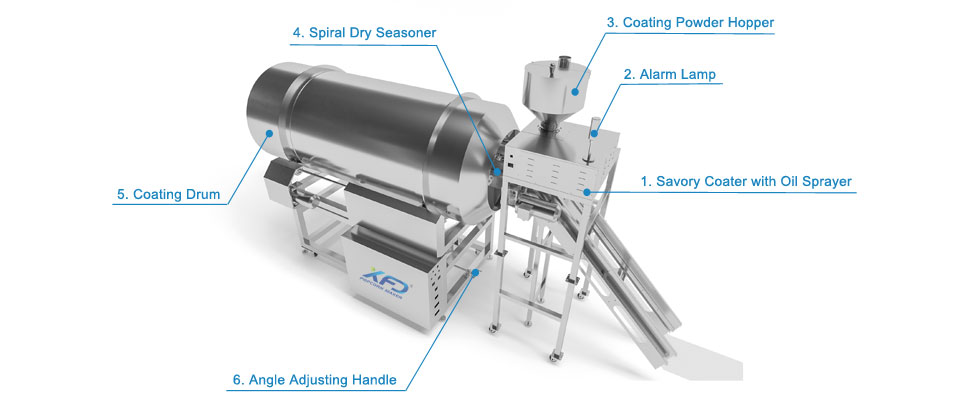
Industrial popcorn coating equipment can combine seasoning distribution and liquid spraying.
The main difference is the physical form of the flavoring ingredient and how it attaches to the popcorn surface. Dry seasoning uses powder particles that need to adhere to the popcorn, while liquid coating uses a liquid carrier or coating mixture that spreads across the kernel surface.
Dry seasoning is commonly used for savory popcorn products, including cheese, barbecue, spicy, and other flavored varieties. Liquid coating is suitable for recipes that use flavored oil, liquid seasonings, or compatible coating ingredients. Some manufacturers also use a combination of both methods to improve seasoning adhesion and flavor consistency.
| Comparison Factor | Dry Seasoning | Liquid Coating |
|---|---|---|
| Ingredient Form | Powder or fine particles | Oil, liquid flavoring, or liquid coating mixture |
| Common Applications | Cheese, barbecue, spicy, and fruit-flavored powders | Flavored oils, liquid seasonings, and suitable coating formulations |
| Adhesion | May require oil or another suitable carrier | Spreads through liquid contact with the popcorn surface |
| Main Process Concern | Powder distribution and dust control | Spray rate, viscosity, and moisture or oil control |
| Texture Considerations | Can maintain a relatively light coating | Depends on the liquid formula and application quantity |
| Equipment | Powder seasoning machine or coating tumbler | Liquid spraying system, coating tumbler, or suitable heated coater |
One important point is that liquid coating does not always mean caramel. A flavored oil spray, a liquid seasoning, and a cooked sugar syrup have different viscosity and temperature requirements. Manufacturers should select equipment according to the actual ingredient formulation.
Dry seasoning is a practical choice for manufacturers producing popcorn with powdered flavor ingredients. It is commonly used for cheese popcorn, barbecue popcorn, spicy popcorn, and other savory or sweet flavored products made with compatible seasoning powders.
The process usually involves preparing the popped popcorn, adding a suitable amount of seasoning powder, and mixing the product until the flavor is distributed across the surface.
Dry seasoning offers several advantages for popcorn production:
However, dry seasoning also has limitations. Powder particles do not always attach well to a completely dry popcorn surface. If the popcorn does not have enough suitable surface adhesion, some seasoning may fall off during mixing, conveying, or packaging.
The particle size of the powder also matters. Very fine powders may create dust or become airborne during feeding, while larger particles may distribute unevenly. Manufacturers should test seasoning particle size, feeding quantity, and mixing conditions together.
A coating powder hopper helps supply seasoning ingredients during industrial popcorn processing.
For factories producing large quantities of flavored popcorn, XFD offers a snack food coating drum with dry seasoning system. The equipment is designed for industrial snack coating and can be integrated into different production-line configurations. Its listed features include automatic spraying, a dry seasoning system, adjustable coating and discharge rates, and a modular structure.
This type of system is suitable for manufacturers who need to distribute dry seasonings and compatible liquid ingredients as part of a continuous coating process. The exact configuration should be matched to the recipe and required production output.
Liquid coating is useful when the product formula requires an oil-based flavor carrier, liquid seasoning, or another coating ingredient that needs to spread over the popcorn surface. Unlike dry powder, liquid ingredients can help create a more continuous surface layer when applied in the correct amount.
For example, some popcorn manufacturers spray a small amount of flavored oil onto the popcorn before adding seasoning powder. The oil helps the powder attach to the surface and reduces the amount of loose seasoning that falls away during handling.
Liquid coating can provide several practical benefits:
However, more liquid does not automatically mean better coating quality. Excessive oil can make popcorn greasy, while water-based ingredients may increase surface moisture and affect crispness. The liquid formulation should be tested for viscosity, compatibility, spray performance, and final product stability.
For example, a cheese popcorn formula may use a small amount of oil to improve powder adhesion. The goal is not to cover the popcorn with a thick liquid layer, but to provide enough carrier for the seasoning to attach evenly.
XFD's CM-400 coater mixer tumbler is a non-heated rotating bowl designed for coating popcorn with powder or suitable liquid ingredients. The product information lists a 5-gallon capacity and describes an approximately 3-minute coating process under the stated operating conditions.
Because this is a non-heated tumbler, it should be used for compatible coating materials rather than as a substitute for equipment that cooks thick caramel syrup. This distinction is important when selecting machinery for different liquid-based recipes.
The coating method can influence how popcorn feels when eaten, how evenly flavor is distributed, and how well the product maintains its crispness during storage.
With dry seasoning, the finished product often has a relatively light coating. The original popcorn texture remains noticeable, especially when the seasoning is applied in a controlled amount. However, insufficient adhesion may cause powder to fall off during handling.
With liquid coating, the result depends on the type and quantity of liquid ingredients. A thin oil-based application can improve powder attachment without making the popcorn noticeably greasy. Excessive liquid, on the other hand, may create a heavy surface coating and reduce the desired crisp texture.
The following comparison can help manufacturers evaluate the two methods:
| Product Characteristic | Dry Seasoning | Liquid Coating |
|---|---|---|
| Surface Feel | Light powder layer | Depends on liquid film and formulation |
| Flavor Adhesion | May need an adhesion aid | Can help distribute compatible flavor ingredients |
| Crispness | Can maintain crispness when moisture is controlled | Depends on liquid type and application quantity |
| Greasy Texture Risk | Generally lower when no oil carrier is used | Can increase if too much oil is applied |
| Seasoning Loss | May increase with poor powder adhesion | Can be reduced with a suitable carrier and process |
Neither method guarantees better texture on its own. The final result depends on the popcorn moisture level, seasoning particle size, liquid-to-popcorn ratio, mixing conditions, and packaging environment.
Yes. In many popcorn formulas, combining a liquid carrier with dry seasoning can provide better flavor distribution than using powder alone. This approach is particularly useful when the seasoning powder has difficulty adhering to the popcorn surface.
A common process is to apply a controlled amount of oil or compatible liquid first, by the dry seasoning powder. The popcorn is then mixed until the ingredients are distributed evenly.
For example, a cheese popcorn manufacturer may use the following process:
The key is to control the application order and ingredient quantity. Adding too much oil before the powder can cause clumping, while adding too much powder at once may lead to uneven distribution.
For larger factories, a continuous coating system with liquid spraying and dry seasoning components can help coordinate these steps. XFD's industrial coating drum is designed with an automatic spraying system and dry seasoner, making it worth evaluating for recipes that require both liquid application and powder distribution.
Manufacturers should still conduct recipe trials to confirm that the selected spraying system, powder feeder, and drum movement are compatible with their ingredients.
The equipment requirement depends on whether the factory uses powder only, liquid ingredients, or a combined coating process. Choosing the correct machine helps improve ingredient distribution and reduces unnecessary material loss.
Dry seasoning equipment
Powder seasoning machines and coating tumblers are commonly used to distribute dry ingredients. They allow popcorn to move continuously while powder is introduced into the coating area. For larger production lines, automatic feeding and powder distribution systems can help maintain a more consistent supply.
Liquid coating equipment
Liquid coating applications may require spraying nozzles, pumps, and suitable mixing systems. These components should match the viscosity and flow characteristics of the liquid ingredient. The equipment must also allow operators to control the application rate and clean the liquid-contact parts.
Caramel and cooked coating equipment
Caramel syrup is different from ordinary liquid seasoning. It usually requires controlled heating, mixing, and coating equipment because of its temperature and viscosity requirements. A non-heated powder tumbler should not be used as a replacement for a dedicated caramelizer when the recipe requires cooking sugar syrup.
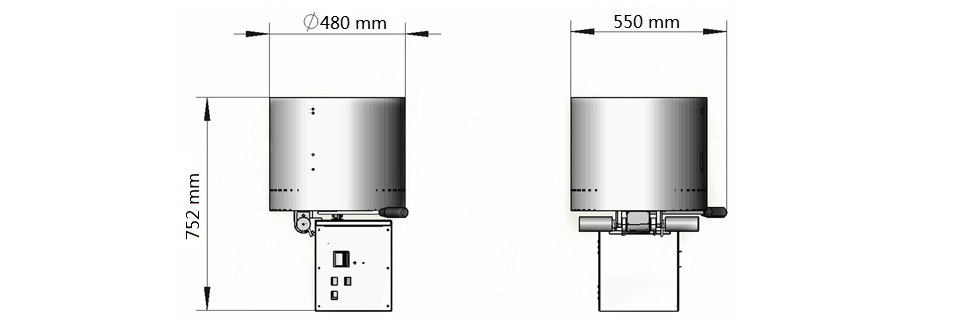
XFD CA-480 cooker and coater equipment for caramel popcorn processing.
For manufacturers producing caramel popcorn, XFD's CA-480 cooker and coater caramelizer is designed for direct caramel coating. Its listed features include large mixing baffles, adjustable digital temperature control, actual product-temperature measurement, and adjustable stirring speed.
These functions are relevant when a production formula requires heating and mixing a caramel coating rather than simply spraying liquid seasoning onto popcorn.
The most suitable process should be selected according to the ingredient formula and the intended finished product. A cheese popcorn formula may need a combination of oil and dry seasoning, while a caramel popcorn formula requires a dedicated cooking and coating process.
| Popcorn Product | Recommended Process | Main Consideration |
|---|---|---|
| Cheese Popcorn | Dry seasoning or oil-assisted powder coating | Powder adhesion and even flavor distribution |
| Barbecue Popcorn | Dry seasoning or combined coating | Powder particle size and coating consistency |
| Spicy Popcorn | Dry seasoning or oil-assisted powder coating | Seasoning coverage and controlled ingredient feeding |
| Caramel Popcorn | Heated caramelizing and coating | Sugar cooking, viscosity, and coating temperature |
| Chocolate-Coated Popcorn | Compatible heated or controlled liquid coating process | Coating temperature, viscosity, and setting conditions |
| Fruit-Flavored Popcorn | Dry flavor powder or suitable flavored coating sugar | Sweetness, color distribution, and surface adhesion |
For a small popcorn shop, a compact coating tumbler may be sufficient for several flavored products. A factory producing multiple varieties at a higher output may need an automatic coating drum with controlled powder feeding and liquid spraying. Manufacturers producing caramel or chocolate-coated products should evaluate the additional heating and cooling requirements.
XFD provides different popcorn coating and seasoning machines for commercial and industrial applications. The product range includes coating tumblers, caramelizers, and other seasoning equipment for different production requirements.
Whether using dry seasoning or liquid coating, material waste often occurs when the feeding rate, mixing conditions, and coating quantity are not properly matched.
For dry seasoning, excessive powder feeding may cause unused ingredients to accumulate inside the machine or fall away during transfer. Insufficient powder feeding can leave some popcorn without enough flavor.
For liquid coating, excessive spraying may make popcorn greasy or cause ingredients to accumulate on equipment surfaces. An insufficient application rate may reduce adhesion and result in inconsistent flavor distribution.
Manufacturers can improve process consistency by following several practical steps:
It is also important to check the finished product after storage. A coating process that looks good immediately after production may still create problems if the popcorn absorbs moisture or loses flavor during packaging and distribution.
What is the main difference between dry seasoning and liquid coating for popcorn?
Dry seasoning uses powdered ingredients to add flavor to popcorn, while liquid coating uses oil, liquid seasoning, or compatible coating mixtures to distribute ingredients across the popcorn surface. The best method depends on the product formula and desired coating result.
Is dry seasoning or liquid coating better for cheese popcorn?
Dry cheese seasoning is commonly used for cheese popcorn. When powder adhesion is insufficient, a controlled amount of suitable oil can be applied before adding the seasoning. This combined process can help improve flavor distribution and reduce loose powder.
Does liquid coating make popcorn less crispy?
Not necessarily. A small amount of suitable oil-based coating may help seasoning adhere without significantly affecting crispness. However, excessive liquid or water-based ingredients can increase surface moisture or create a greasy texture. The formula and application rate should be tested carefully.
Can dry seasoning and liquid coating be used together?
Yes. Manufacturers can apply a suitable liquid carrier first and then add dry seasoning powder. This is a common approach for flavored popcorn products that need improved powder adhesion and more consistent flavor distribution.
What machine is suitable for dry popcorn seasoning?
A popcorn coating tumbler, powder seasoning machine, or industrial coating drum can be used depending on production capacity and process requirements. Larger factories may benefit from automatic powder feeding and continuous coating systems.
Can a popcorn coating tumbler handle liquid ingredients?
Some coating tumblers are designed to handle both powder and suitable liquid ingredients. For example, XFD's CM-400 is a non-heated tumbler that supports powder or liquid coating. However, it is not designed to replace a heated caramelizer for cooking thick sugar syrup.
What is the difference between a liquid seasoning system and a caramelizer?
A liquid seasoning system applies compatible liquid ingredients, often through spraying and mixing. A caramelizer heats and mixes ingredients to prepare and apply cooked caramel coating. The two systems have different heating, viscosity, and processing requirements.
How can manufacturers reduce powder loss during popcorn coating?
Manufacturers should control powder feeding, choose suitable seasoning particle sizes, maintain an appropriate mixing speed, and ensure that the popcorn surface provides sufficient adhesion. A compatible oil carrier may also help reduce loose seasoning.
Which coating method is more suitable for industrial popcorn production?
The best method depends on the recipe and target output. Dry seasoning systems are suitable for powdered flavors, liquid spraying systems are useful for compatible liquid ingredients, and heated caramelizers are needed for cooked caramel coatings. Industrial factories should select equipment according to the complete production process.
Dry seasoning and liquid coating both have important roles in popcorn manufacturing. Dry seasoning offers flexibility for powdered flavors such as cheese, barbecue, and spicy varieties. Liquid coating can improve surface coverage and help seasoning adhere when the formula requires an oil-based or other compatible liquid ingredient. For some products, combining the two methods provides a practical way to achieve more consistent flavor distribution.
The most suitable process should always be based on the actual product formula, coating material, required texture, and production capacity. Manufacturers should also distinguish between ordinary liquid seasoning and cooked caramel syrup because they require different equipment and processing conditions.
XFD provides popcorn coating tumblers, industrial dry seasoning drums, caramelizers, and complete popcorn production solutions for different manufacturing needs. Whether you are developing a new flavored popcorn product or upgrading an existing factory, choosing equipment that matches your coating process can help improve product consistency and production efficiency.
Visit XFD Popcorn to explore popcorn coating equipment and industrial production solutions.
 No.58 TongMing Road,TongAn District,XiaMen City,FuJian Province
 +86-592-5701935
If you are interested in any XFD product, please leave us a message, we will reply to you soon.
Copyright © 2012-2026 XFD XIAMEN MACHINERY TECHNOLOGY LTD..All Rights Reserved.
 English
 Deutsch
 русский
 español
 português
 Nederlands
 العربية
 हिंदी