Categories
New Blog
Packaged popcorn stays fresh and crisp when moisture is kept out, the product is cooled properly before packing, and the packaging material provides an effective barrier against humidity. For popcorn manufacturers and snack brands, freshness depends on the entire process—from popping and flavor coating to cooling, sealing, storage, and distribution.
Popcorn may leave the production line with a light, crunchy texture but become soft after a few days if moisture enters the package or the seal is not reliable. For businesses selling retail popcorn, gourmet popcorn, or caramel popcorn, maintaining consistent crispness is essential to product quality and customer satisfaction.
XFD Popcorn provides equipment solutions for popcorn production, flavor coating, cooling, and packaging. Understanding how these processes work together can help manufacturers develop a more reliable packaged popcorn production workflow.
The main reason packaged popcorn loses its crispness is moisture absorption. Popcorn has a light, porous structure, and exposure to humid air can change its texture. Instead of breaking apart with a crisp bite, the popcorn may become soft, chewy, or sticky.
Several factors can contribute to this problem:
For commercial producers, the solution is not simply to choose a thicker bag. The packaging material, cooling process, sealing method, and intended shelf life should be evaluated together.
One of the most important steps in keeping packaged popcorn crisp is allowing it to cool sufficiently before packing. Freshly popped popcorn can retain heat, and warm product placed directly into a sealed package may create conditions that encourage condensation.
The appropriate cooling time depends on the batch size, coating type, product temperature, airflow, and production environment. Rather than relying on a fixed waiting period, manufacturers should establish a suitable packing-temperature range through production trials and quality checks.
Cooling is especially important for flavored popcorn. Caramel, sugar, and other coatings may behave differently from plain popcorn during cooling. If the coating remains too warm or tacky, kernels may stick together, and the finished product may be more difficult to package consistently.
For larger operations, a dedicated cooling and conveying stage can help control the movement of popcorn between processing and packing. XFD's industrial popcorn production equipment includes production-line solutions designed for factory-scale processing, with configurations that can incorporate cooling, filtering, and coating stages.
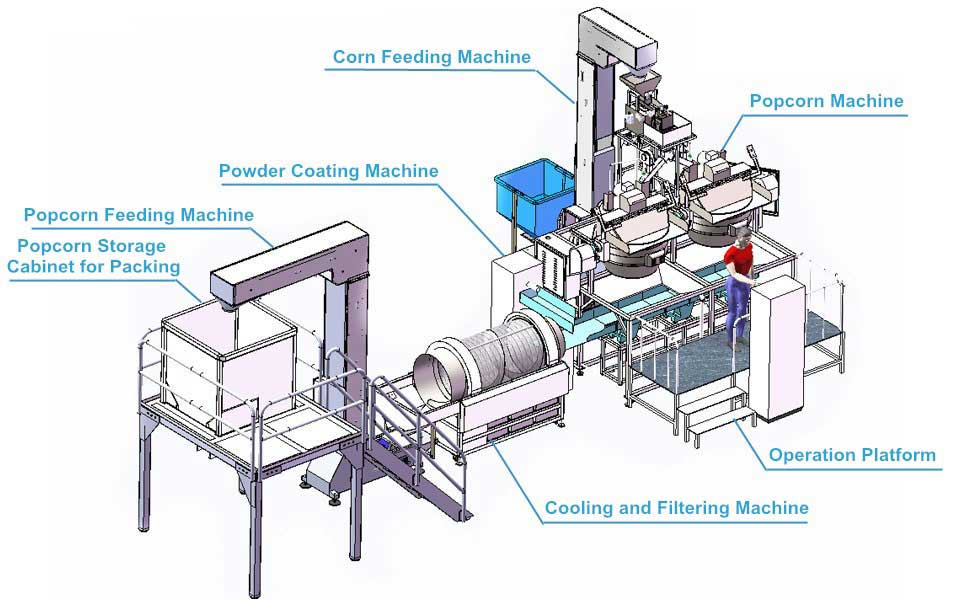
An integrated popcorn production line can help organize the transition from popping and coating to cooling and subsequent packaging.
What type of packaging keeps popcorn fresh the longest? The best choice is packaging that provides a suitable moisture barrier, seals reliably, and matches the product's expected storage and distribution conditions.
For retail popcorn, laminated flexible films are commonly considered because their barrier properties can be tailored to the product. However, performance varies by material structure, thickness, seal quality, and package design. Manufacturers should verify the actual moisture-barrier performance instead of assuming that every plastic bag offers the same protection.
When selecting packaging for commercial popcorn, consider these factors:
Manufacturers developing a new retail product can also review suitable popcorn equipment and packaging-related solutions when planning the production process. The finished package should be evaluated with the actual popcorn recipe and storage conditions, not just selected by appearance or cost.
Even a high-barrier packaging material may not protect popcorn properly if the seal is weak. A reliable sealing process helps prevent humid air from entering the package and supports consistent product quality during distribution.
For production teams, useful quality checks include:
These checks become particularly important when output increases. A manual process that works for small batches may not provide the same consistency at factory scale. An appropriately configured fully automatic popcorn production and packing line can help businesses coordinate production and packaging operations. Actual sealing performance still depends on the selected packaging system, film, settings, and quality-control procedures.
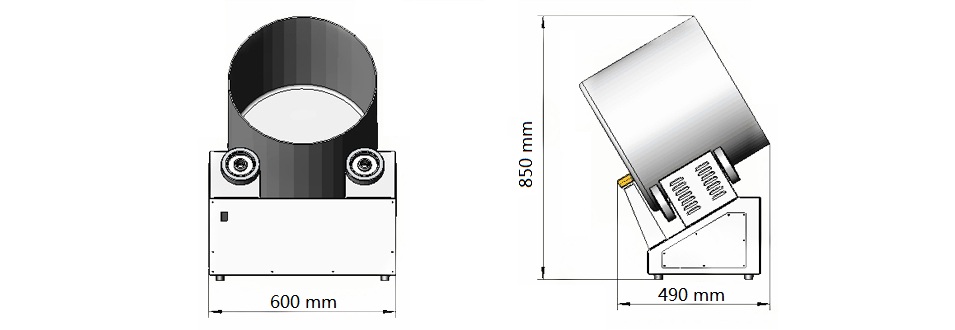
Suitable production and packaging equipment helps manufacturers maintain a more consistent process for finished popcorn products.
Seasoning and coating can affect how well packaged popcorn maintains its texture. Plain popcorn, powdered cheese popcorn, caramel popcorn, and other specialty varieties do not necessarily respond to moisture in the same way.
For example, caramel coatings can become sticky under unsuitable temperature or humidity conditions. Powdered seasonings may also change how the finished product feels and handles. The coating recipe, application consistency, and cooling process should therefore be considered alongside the packaging material.
For manufacturers producing multiple flavors, consistent coating helps reduce variation between batches. XFD offers a range of popcorn coating machines for applying flavoring to popcorn. Depending on the product and production requirements, the coating stage can be incorporated into a broader processing workflow.
Before launching a new flavor, test the finished popcorn after cooling, packing, and storage. Check for softness, sticking, uneven coating, and changes in flavor or appearance. These tests help determine whether the recipe, cooling conditions, or packaging specification needs adjustment.
After sealing, packaged popcorn should be stored in a clean, dry place away from direct sunlight, excessive heat, and sources of moisture. Storage conditions should remain as stable as practical throughout warehousing and transportation.
Good storage practices include:
There is no single storage period that applies to every type of packaged popcorn. Shelf life depends on the recipe, initial moisture content, packaging barrier, seal integrity, and storage conditions. Manufacturers should validate shelf life for the actual product rather than relying on a general estimate.
For popcorn factories, maintaining crispness is easier when freshness control is considered throughout production instead of being treated as a packaging issue alone. The workflow may include popping, flavor coating, cooling, conveying, inspection, filling, sealing, and finished-product storage.
Each stage should work at a compatible speed. If the packing stage cannot handle the output of the upstream equipment, popcorn may accumulate and remain exposed to the production environment longer than intended. Excessive delays can make temperature and humidity control more difficult.
When evaluating equipment, manufacturers should consider production capacity, flavor requirements, cooling arrangements, packaging format, cleaning access, and the degree of automation needed. XFD provides popcorn production line solutions for businesses planning or upgrading their manufacturing workflow.
The right configuration depends on the product and factory requirements. A small gourmet popcorn business may need a different arrangement from a large snack manufacturer producing multiple retail bag sizes. Discussing the intended output and packaging format before selecting equipment can help avoid bottlenecks and unnecessary investment.
A practical quality-control program should evaluate the finished package over time, not just immediately after production. Samples can be retained under defined storage conditions and checked at planned intervals.
Useful checks include:
For a new product, compare different packaging materials and sealing settings using the same popcorn recipe. Record the storage conditions and inspection results so the team can identify which combination delivers the most consistent quality.
In short, packaged popcorn stays fresh and crisp when manufacturers control moisture, cool the product appropriately, use suitable barrier packaging, maintain reliable seals, and store the finished bags correctly. Combining these practices with a well-planned production workflow gives snack brands a stronger foundation for consistent product quality.
How do you keep packaged popcorn fresh and crisp?
Cool popcorn appropriately before packing, use packaging with a suitable moisture barrier, ensure the seals are reliable, and store the finished packages in a cool, dry environment. Shelf life should be validated for the specific recipe and packaging.
Why does sealed popcorn become soft?
Popcorn can become soft when moisture enters through the packaging material or a weak seal. Condensation, unsuitable storage conditions, and product-specific coating characteristics can also contribute to texture changes.
Should popcorn cool before packaging?
Yes. Popcorn should reach a suitable packing temperature before sealing. Packing it while too warm may create conditions for condensation, depending on the product and environment. The appropriate temperature should be established through process testing.
What packaging is best for keeping popcorn crispy?
Packaging with a suitable moisture barrier and reliable seals is generally preferred. The best material depends on the popcorn recipe, distribution conditions, desired shelf life, and package design. Performance should be verified with the finished product.
Can caramel popcorn and plain popcorn use the same packaging?
Possibly, but the choice should be based on testing. Caramel popcorn may have different sticking, coating, and moisture-related requirements from plain popcorn. Manufacturers should evaluate the recipe, package compatibility, and storage performance before making a final decision.
How can a popcorn factory improve packaging consistency?
A factory can standardize cooling conditions, match packing capacity to production output, verify sealing settings, inspect package integrity, and conduct shelf-life tests. Suitable automated production and packing equipment can help coordinate these stages.
Does a thicker bag always keep popcorn fresher?
No. Thickness alone does not determine moisture-barrier performance. The material structure, sealing quality, and package integrity are also important. Manufacturers should compare technical specifications and test the complete package.
 No.58 TongMing Road,TongAn District,XiaMen City,FuJian Province
 +86-592-5701935
If you are interested in any XFD product, please leave us a message, we will reply to you soon.
Copyright © 2012-2026 XFD XIAMEN MACHINERY TECHNOLOGY LTD..All Rights Reserved.
 English
 Deutsch
 русский
 español
 português
 Nederlands
 العربية
 हिंदी