Categories
New Blog
Choosing the right oil is one of the most important decisions when making commercial popcorn. The oil affects flavor, aroma, texture, heat transfer, and the consistency of every batch. For cinema operators, concession stands, snack shops, and popcorn manufacturers, the best oil is not simply the one that tastes good. It must also perform reliably at the operating temperature of the popcorn machine.
Refined coconut oil is a popular choice for traditional movie theater popcorn because it provides a characteristic buttery-style aroma and flavor, while refined palm oil and high-oleic oils can be suitable alternatives depending on the recipe, cost target, and nutritional requirements. The final choice should take into account the machine manufacturer's recommendations, the desired flavor profile, and the conditions under which the popcorn will be served or packaged.
XFD Popcorn supplies commercial and industrial popcorn equipment for different production requirements. Understanding how popping oil interacts with the machine and the ingredients helps businesses achieve more consistent results and select a suitable production setup.
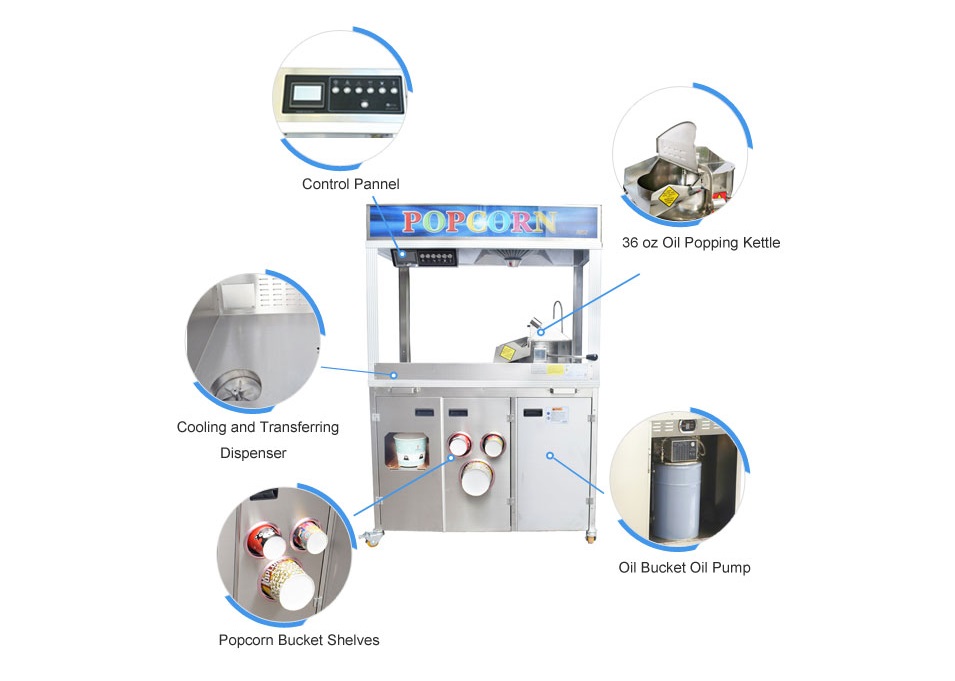
For traditional cinema-style popcorn, refined coconut oil is often a preferred option because of its recognizable flavor and suitability for high-temperature popping when used according to the supplier's specifications. Refined palm oil and high-oleic canola or sunflower oil are alternatives for businesses with different flavor, formulation, and supply requirements.
There is no single oil that is best for every commercial popcorn business. A movie theater serving freshly popped, buttery-style popcorn may prioritize aroma and flavor, while a packaged popcorn manufacturer may focus more on oxidation stability, product shelf life, ingredient labeling, and production cost.
The main factors to compare are:
For businesses choosing a machine and ingredient combination, XFD's popcorn ingredients category is a useful starting point for exploring popcorn-making ingredients and flavoring products.
Yes. Refined coconut oil is commonly used for commercial and cinema-style popcorn because it offers a distinctive aroma and flavor that many consumers associate with movie theater popcorn. Its performance depends on the specific formulation, refining process, storage conditions, and machine operating temperature.
Coconut oil can be solid or semi-solid at ordinary room temperatures, depending on its composition and the surrounding temperature. Commercial operations may therefore need an appropriate melting and dispensing method to ensure consistent dosing.
When selecting coconut oil, consider the following:
Refined coconut oil is not automatically the best choice for every formulation. Businesses that need a different nutritional profile, flavor, or ingredient declaration should compare alternatives with their ingredient supplier before making a large-scale change.
For high-volume operations, XFD's commercial popcorn machines include different machine configurations for commercial venues. When comparing equipment, ask whether the oil feeding and melting arrangements are compatible with the oil you intend to use.
Refined palm oil and high-oleic canola or sunflower oil can be suitable alternatives to coconut oil. The best option depends on the required flavor, cooking performance, ingredient specifications, and overall production cost.
Refined palm oil is used in some commercial food applications because of its functional properties and availability. Depending on the formulation, it can provide suitable heat performance for popcorn production. Buyers should also consider the supplier's quality specifications and any sustainability or sourcing requirements relevant to their market.
High-oleic canola oil can be an option for businesses seeking a relatively neutral flavor and a high proportion of monounsaturated fat. Its suitability depends on the exact product grade and the temperatures involved.
High-oleic sunflower oil is another potential alternative. Its relatively high oleic acid content can improve oxidative stability compared with conventional high-linoleic sunflower oil, although actual performance depends on the formulation and processing conditions.
When comparing oils, avoid relying on a generic smoke-point number alone. Refining, fatty-acid composition, impurities, repeated heating, and the actual machine temperature all influence performance. Use the oil manufacturer's technical data and follow the popcorn machine supplier's instructions.
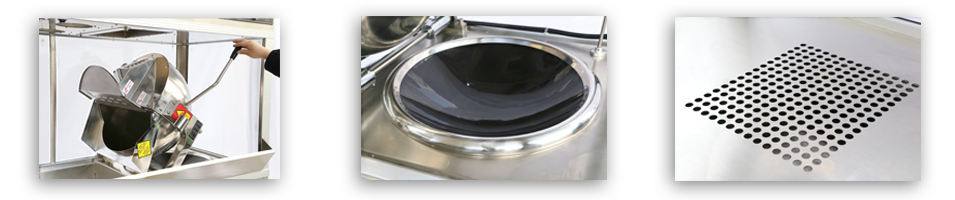
For businesses operating at a larger scale, XFD's industrial popcorn machines can be evaluated alongside the selected oil and ingredient formula. Production trials are important because an oil that works well in one machine or recipe may not deliver the same results in another setup.
Butter and olive oil can contribute flavor, but they are not interchangeable with every commercial popping oil.
Regular butter is generally not the first choice for high-temperature kettle popping. It contains water and milk solids, which can burn or affect the popping process. For a buttery flavor, businesses can consider suitable butter-flavored oils or add an appropriate butter-flavored topping after popping.
Olive oil requires more careful selection. Extra virgin olive oil has a distinctive flavor that may not suit traditional cinema popcorn, and its performance depends on the product's quality and the actual cooking temperature. A suitable refined olive oil may behave differently, so it should not be treated as equivalent to extra virgin olive oil.
For a commercial operation, the practical choice is an oil designed for the intended cooking process, with a documented specification and consistent supply. Before introducing a new oil, test the flavor, popping yield, residue, and machine compatibility under normal operating conditions.
Businesses producing specialty flavors can also review XFD's popcorn ingredient range to explore coating sugars and other flavoring ingredients that can complement the chosen popping oil.
The correct amount of oil depends on the kettle capacity, kernel quantity, oil type, and recipe. There is no universal ratio that works for every commercial popcorn machine.
Too little oil may affect heat transfer and kernel coating, while too much can leave popcorn greasy, increase oil consumption, and create more residue in the kettle or cabinet.
For consistent results, operators should:
For large production facilities, consistent oil dosing becomes particularly important. XFD's large-scale popcorn production and coating line includes production equipment designed for higher-volume operations, with systems for oil feeding and oil temperature management described in the product specifications.
The correct oil ratio should still be established according to the actual equipment configuration and the ingredient supplier's recommendations. An industrial production line should not automatically use the same formula as a small cinema kettle.
Popping oil affects more than the surface appearance of popcorn. It contributes to heat transfer, flavor development, the distribution of seasoning, and the final mouthfeel.
If popcorn tastes greasy, the oil quantity may be excessive or the recipe may not be balanced. If the flavor is stale or unpleasant, investigate the oil's storage conditions, freshness, and exposure to heat and air. If popcorn becomes soft after production, moisture absorption and packaging conditions may be more important than the oil itself.
Oil selection should therefore be evaluated as part of the complete recipe, including kernel variety, salt, flavoring, popping conditions, cooling, and packaging.
For businesses producing caramel or other coated popcorn, the oil used for popping should also be distinguished from ingredients used in the coating stage. XFD's industrial popcorn cooker and coater is designed for factory-scale popping and coating applications. The appropriate process depends on the product recipe and production requirements.
Even a suitable popping oil can develop off-flavors if it is stored incorrectly. Exposure to oxygen, heat, light, and contamination can accelerate deterioration, while solid oils may also require specific temperature conditions for convenient handling.
To maintain oil quality, businesses should:
In high-volume facilities, oil storage and dispensing should be considered when planning the entire production workflow. Equipment selection, oil handling, cleaning procedures, and ingredient control all contribute to consistent popcorn quality.
The best commercial popcorn oil depends on the product you want to make and the way your business operates. Cinema concessions often prioritize a familiar theater-style flavor, while snack manufacturers may focus on formulation consistency, shelf life, and production cost.
Before choosing an oil, consider the following business requirements:
For cinema and concession businesses, explore XFD's cinema popcorn machine range. For factory-scale production, compare the requirements of the complete processing line rather than choosing an oil independently of the equipment.
Ultimately, refined coconut oil is a strong starting point for traditional cinema-style popcorn, while refined palm oil and high-oleic oils may be suitable alternatives. The most reliable choice is the one that meets your recipe, machine specifications, food-quality requirements, and business costs.
What type of oil is best for commercial popcorn?
Refined coconut oil is a popular choice for traditional cinema-style popcorn because of its characteristic flavor and aroma. Refined palm oil and high-oleic canola or sunflower oil can be alternatives depending on the recipe, equipment, and production requirements.
Why do movie theaters use coconut oil for popcorn?
Refined coconut oil is commonly used because its flavor and aroma suit traditional movie theater popcorn. The exact oil used varies by operator, supplier, and recipe.
Can I use olive oil in a commercial popcorn machine?
It depends on the olive oil product, its flavor, and the machine's operating requirements. Extra virgin olive oil has a distinctive flavor and should not automatically be treated as interchangeable with oils formulated for commercial popping.
Can I use butter instead of popping oil?
Regular butter is generally unsuitable as a direct substitute for commercial popping oil because its water and milk solids can affect heating and burn. A suitable butter-flavored oil or post-popping topping may be a better option.
How much oil should I use for one batch of popcorn?
The correct amount depends on the kettle capacity, kernel quantity, oil type, and recipe. Follow the equipment manufacturer's instructions and measure each batch consistently.
Why does commercial popcorn taste greasy?
Excessive oil, an unbalanced recipe, or inconsistent dosing can make popcorn greasy. Check the recommended oil-to-kernel ratio and adjust the recipe through controlled production trials.
Does the type of oil affect popcorn shelf life?
Yes, oil composition and oxidative stability can influence flavor quality during storage. However, final shelf life also depends on moisture, packaging, oxygen exposure, storage conditions, and the overall formulation.
Where can I find popcorn equipment for commercial production?
XFD Popcorn offers commercial and cinema popcorn machines as well as industrial production equipment. The appropriate setup depends on batch capacity, production volume, oil handling, flavoring, and packaging requirements.
For help matching a popcorn machine to your oil and recipe, contact XFD Popcorn with your intended product, target production volume, and preferred oil type.
 No.58 TongMing Road,TongAn District,XiaMen City,FuJian Province
 +86-592-5701935
If you are interested in any XFD product, please leave us a message, we will reply to you soon.
Copyright © 2012-2026 XFD XIAMEN MACHINERY TECHNOLOGY LTD..All Rights Reserved.
 English
 Deutsch
 русский
 español
 português
 Nederlands
 العربية
 हिंदी