Categories
New Blog
Gas VS Electric Commercial Popcorn Machine Guide
When choosing a commercial popcorn machine, the heating method is one of the first things a business needs to consider. Gas and electric popcorn machines can both be used for commercial popcorn production, but they have different requirements for installation, ventilation, temperature control, maintenance, and daily operation.
For cinemas, concession stands, snack shops, stadiums, entertainment venues, and popcorn businesses, the right choice depends on more than the fuel source. Production volume, available utilities, kettle capacity, peak-hour demand, floor space, and operating conditions all affect which popcorn machine configuration makes sense.
This guide explains the main differences between gas and electric commercial popcorn machines and also looks at electromagnetic heating, an electric heating technology used in XFD's commercial popcorn equipment.
The basic difference is straightforward: a gas popcorn machine generates heat through a gas burner, while an electric popcorn machine uses electrical energy to heat the kettle. Electromagnetic popcorn machines are also electrically powered, but they use electromagnetic heating to transfer heat directly to a suitable metal kettle.
| Factor | Gas Popcorn Machine | Electric Popcorn Machine |
|---|---|---|
| Heat source | Gas burner | Electrical heating system |
| Installation | Requires a suitable gas supply | Requires suitable electrical capacity |
| Combustion | Yes | No combustion from the heating system |
| Ventilation considerations | Requires attention to combustion and local ventilation requirements | Generally simpler because there is no gas combustion |
| Typical commercial use | Sites with suitable gas infrastructure | Cinemas, shops, concessions and other commercial venues |
There is no single heating method that fits every popcorn business. A machine should be selected according to the actual site conditions and production requirements rather than simply choosing between gas and electricity.
A gas commercial popcorn machine uses a burner to generate heat, which is transferred to the cooking kettle. Oil and popcorn kernels are heated inside the kettle until the kernels reach the required temperature and pop.
Gas heating can be practical in locations that already have an appropriate gas supply. However, commercial operators also need to consider gas installation, combustion, ventilation, clearances, and local safety requirements.
These requirements can be particularly important for indoor locations such as cinemas, shopping malls, food courts, and enclosed concession areas. Before installing gas-powered equipment, the operator should confirm that the location can support the required gas and ventilation infrastructure.
An electric popcorn machine converts electrical energy into heat through an electrical heating system. Traditional commercial kettle machines typically use heating elements positioned beneath or around the kettle to transfer heat into the cooking surface.
Electric popcorn machines are widely used in commercial food-service environments because many locations already have electrical infrastructure available. The main requirement is making sure that the available voltage and electrical capacity match the machine specifications.
XFD currently offers commercial popcorn equipment based on electric and electromagnetic heating technologies. Its product range includes machines for snack shops, cinemas, concessions, large venues, and other commercial applications.
For businesses comparing available commercial equipment, the commercial popcorn machine range provides different configurations based on venue and production requirements.
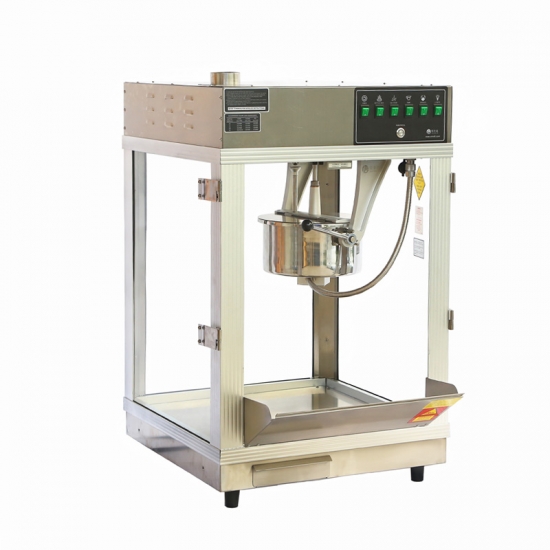
The XFD 16 oz table model is designed for smaller commercial locations. The manufacturer lists a 2.8 kW power rating and 220 V or customer-required voltage, with applications including catering, snack shops, and other commercial places.
Installation requirements can make a significant difference when selecting commercial popcorn equipment.
A gas machine requires access to a suitable gas supply and may involve additional ventilation considerations because combustion takes place during operation. The exact requirements depend on the machine, building, and local regulations.
An electric machine does not require a gas connection, but the electrical supply still needs to be checked carefully. A high-capacity commercial popcorn machine may require a different voltage or electrical load from the standard power available in a small retail location.
For this reason, commercial buyers should provide the manufacturer with the installation location, available voltage, electrical capacity, desired production volume, and other site information before ordering equipment.
An electromagnetic popcorn machine is an electrically powered popcorn machine that uses electromagnetic heating technology instead of relying only on conventional heating elements.
The principle is different from a traditional electric kettle. Electromagnetic energy is used to heat a suitable metal kettle directly, allowing heat to be concentrated in the cooking area.
This technology is particularly relevant when a business needs faster batch cycles and higher commercial production efficiency. XFD's induction popcorn equipment uses a round-bottom kettle and is designed for applications such as cinemas, canteens, snack shops, and other commercial venues.
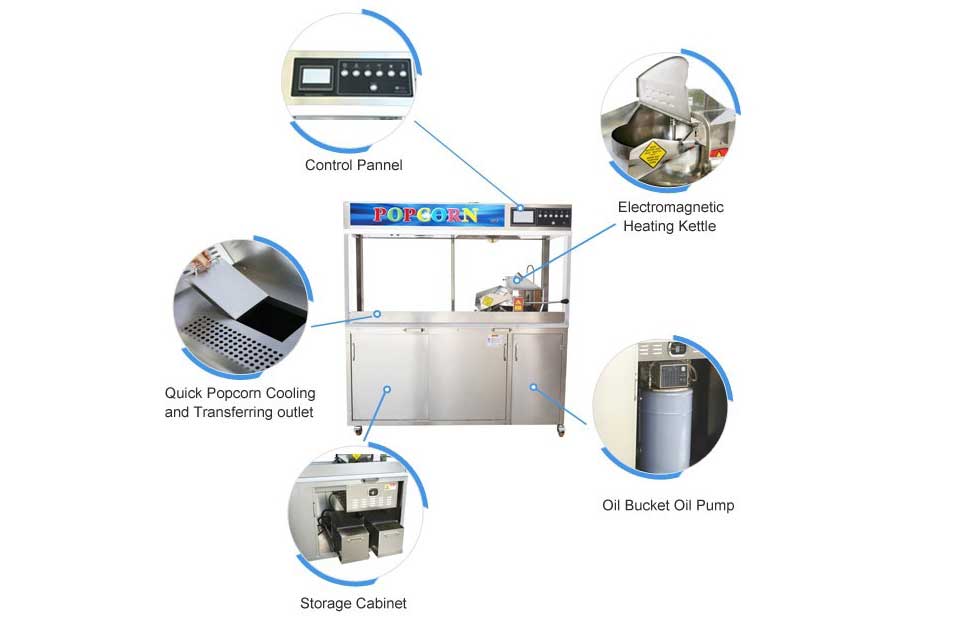
One XFD 36 oz induction popcorn model is listed with a 10 kW power rating, customized or 380 V voltage, a round-bottom kettle, automatic oil feeding, an exhaust system, an automatic cooling system, and an oil-melting system. XFD states that the machine can make a kettle of popcorn in approximately three minutes.
For buyers specifically interested in this type of heating technology, the induction popcorn popper for commercial venues is one example of how XFD applies electromagnetic heating to commercial popcorn production.
Energy consumption should be evaluated based on the complete machine system rather than simply comparing the price of gas with the price of electricity.
The actual operating cost depends on the machine's rated power, heating efficiency, batch size, production cycle, operating hours, local utility prices, and production volume.
Traditional electric heating and electromagnetic heating can also have different heat-transfer characteristics. XFD explains that its electromagnetic technology heats the kettle directly, while its traditional electric kettle uses electrical heating elements to transfer heat into the kettle.
For a business that produces popcorn continuously throughout the day, the number of batches produced per hour can be just as important as the energy used during each batch.
A useful way to compare machines is to calculate the estimated energy cost per kilogram or per batch of finished popcorn. This gives a more meaningful comparison than looking only at the machine's rated power.
Cinemas usually have concentrated periods of high popcorn demand. Customer traffic can increase significantly before a movie and during short intermission periods, so the equipment needs to support the required production rate.
For cinema applications, buyers should consider kettle size, number of kettles, batch cycle time, peak-hour demand, warming capacity, available electrical power, and the amount of space available at the concession counter.
XFD offers cinema popcorn equipment in different configurations, including traditional electric heating and electromagnetic heating solutions.
For example, XFD's 36 oz induction popcorn machine is designed for cinema and commercial applications and includes automatic oil feeding, exhaust, cooling, and other operating functions.
Businesses planning a cinema concession operation can review the cinema popcorn machine range to compare different kettle capacities and equipment configurations.
A small popcorn shop does not necessarily need the same production capacity as a cinema. Floor space, ease of operation, cleaning, electrical capacity, and daily production volume can be more important considerations.
A compact electric table model can be suitable when the business produces popcorn in relatively small batches throughout the day.
XFD's 16 oz table model has a compact design and is described by the manufacturer as suitable for snack shops, catering, drinks, and other commercial locations. It also features a heated corn deck and a stainless steel or nickel-plated steel kettle.
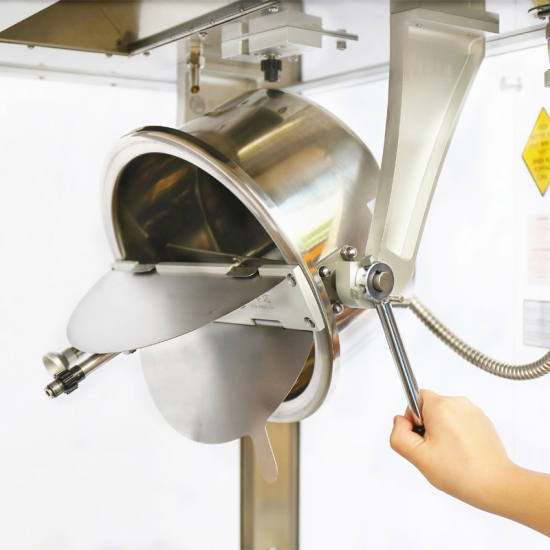
The kettle design is an important part of any commercial popcorn machine because it affects cooking, stirring, dumping, cleaning, and routine maintenance.
Both gas and electric popcorn machines require regular cleaning and maintenance. Oil, seasoning, popcorn residue, and other food particles should be removed regularly from food-contact areas and surrounding surfaces.
Gas equipment has additional components associated with the gas supply and combustion system. These components should be inspected according to the manufacturer's instructions and applicable local requirements.
Electric machines do not use gas burners, but their electrical components still need appropriate care. Water and cleaning solutions should not be allowed to enter electrical components, controls, or wiring.
Regular maintenance should include cleaning the kettle, checking the stirring system, inspecting controls, checking heating components, removing oil buildup, and keeping ventilation or exhaust areas clean where applicable.
For businesses operating popcorn equipment every day, ease of maintenance should be considered during equipment selection rather than after installation.
Heating technology is important, but kettle capacity and production rate can be equally important for commercial buyers.
A machine with a small kettle may not keep up with demand during peak periods, even if the heating system is efficient. At the same time, a large machine may take up unnecessary space if the business only sells a limited amount of popcorn.
Before choosing a commercial popcorn machine, consider:
For factories and large-scale popcorn producers, the equipment requirements are different again. Instead of a standalone concession popper, the operation may require continuous popping, seasoning, coating, cooling, conveying, and packaging equipment.
XFD provides industrial popcorn machine solutions for larger production applications, including popcorn production and coating systems.
Before requesting a quotation, it helps to prepare the basic information about your business and installation site. This gives the manufacturer enough information to recommend a suitable configuration.
Providing these details at the quotation stage can help avoid selecting equipment that is either too small for the application or unnecessarily large for the actual production requirement.
The purchase price is only one part of the total cost of commercial popcorn equipment.
Businesses should also consider installation, energy consumption, ventilation requirements, maintenance, replacement components, labor, downtime, and expected equipment life.
A lower equipment price does not automatically mean a lower total cost of ownership. A machine that operates for several hours every day should be evaluated based on its complete operating requirements.
For example, a cinema may focus on production rate and peak-hour capacity, while a small snack shop may place more emphasis on compact size, easy cleaning, and simple operation.
Electromagnetic heating gives commercial popcorn equipment another option between traditional electric heating and other heating technologies.
The technology can be useful for applications where fast heating, repeatable production cycles, and controlled operation are important. XFD's induction popcorn equipment uses a round-bottom kettle and incorporates functions such as automatic oil feeding, cooling, exhaust, and programmable controls on selected models.
For larger commercial operations, these features can help reduce manual steps during normal popcorn production.
However, electromagnetic heating is still an electrical technology. The installation site must have an appropriate electrical supply, and the machine's voltage and power requirements should be confirmed before purchase.
XFD's popcorn equipment portfolio covers several commercial applications rather than focusing on a single machine configuration.
The product range includes traditional electric kettle machines, electromagnetic popcorn machines, hot air popcorn equipment, cinema poppers, coating machines, staging cabinets, and industrial popcorn production systems.
This allows equipment selection to start with the business application. A small snack shop may need a compact table model, a cinema may need a higher-capacity single or twin-kettle system, while a popcorn factory may require an integrated production and coating line.
For businesses comparing different machine configurations, the XFD popcorn equipment product range provides a starting point for reviewing available equipment types.
Is a gas popcorn machine better than an electric popcorn machine?
Neither heating method is automatically suitable for every business. Gas may fit a location that already has suitable gas infrastructure, while electric equipment may be more practical where adequate electrical capacity is available. Installation conditions, production volume, ventilation, and operating costs should all be considered.
Are commercial popcorn machines electric?
Many commercial popcorn machines use electric heating. XFD's current commercial equipment portfolio includes traditional electric and electromagnetic heating technologies, along with other popcorn production systems.
Is an electromagnetic popcorn machine electric?
Yes. An electromagnetic popcorn machine is electrically powered. The difference is that electromagnetic energy is used to heat the suitable metal kettle rather than relying only on conventional electrical heating elements.
How quickly can an electromagnetic popcorn machine make popcorn?
Production speed depends on the machine model, kettle capacity, recipe, and operating conditions. XFD lists approximately three minutes for one kettle on its 36 oz induction popcorn machine.
What size popcorn machine does a cinema need?
The required size depends on cinema seating capacity, concession traffic, peak-hour demand, and desired production rate. The kettle size and number of kettles should be selected based on the amount of popcorn required during the busiest operating periods.
What popcorn machine is suitable for a small snack shop?
A compact table model can be suitable for smaller commercial applications where popcorn is produced in smaller batches. XFD's 16 oz table model is designed for snack shops, catering, drinks, and other commercial places.
Can commercial popcorn machines be customized?
Commercial popcorn equipment can often be configured according to application requirements, including voltage, capacity, machine structure, appearance, and production setup. Buyers should provide the manufacturer with detailed site and production information when requesting a quotation.
The most useful way to compare gas and electric commercial popcorn machines is to look at the complete operating environment.
Gas equipment may make sense when a suitable gas supply and ventilation infrastructure are already available. Electric popcorn machines can fit commercial locations with adequate electrical capacity and no need for gas combustion. Electromagnetic heating provides another electrically powered option for businesses looking for a different approach to commercial kettle heating.
For small shops, compact equipment may be the priority. For cinemas, kettle capacity and peak-hour production are often major considerations. For factories, an integrated popcorn production system may be more appropriate than a standalone commercial popper.
Ultimately, the right commercial popcorn machine should match the business's production volume, installation conditions, available utilities, operating workflow, and future requirements.
XFD provides commercial and industrial popcorn equipment for different applications, including electric popcorn machines, electromagnetic popcorn machines, cinema popcorn equipment, hot air popcorn systems, coating equipment, and industrial production lines. Businesses can provide their application details and site requirements when discussing equipment options with the manufacturer.
 No.58 TongMing Road,TongAn District,XiaMen City,FuJian Province
 +86-592-5701935
If you are interested in any XFD product, please leave us a message, we will reply to you soon.
Copyright © 2012-2026 XFD XIAMEN MACHINERY TECHNOLOGY LTD..All Rights Reserved.
 English
 Deutsch
 русский
 español
 português
 Nederlands
 العربية
 हिंदी
हिंदी