Categories
New Blog
Freshly popped popcorn should be light, crisp, and easy to bite. But sometimes, even when the kernels pop properly, the finished popcorn becomes chewy, tough, or slightly rubbery after a short time. This is a common problem for home snack makers, cinemas, concession stands, and commercial popcorn manufacturers.
Popcorn becomes chewy after popping mainly because moisture gets back into the popped corn. Steam released during cooking, humid storage conditions, an unsuitable holding environment, or packaging popcorn before it has cooled sufficiently can all reduce crispness. The right popping process and post-popping handling help maintain the texture customers expect.
For businesses producing popcorn in large quantities, understanding why popcorn loses its crunch is particularly important. The following guide explains the causes, practical solutions, and equipment considerations for producing consistently crisp popcorn.
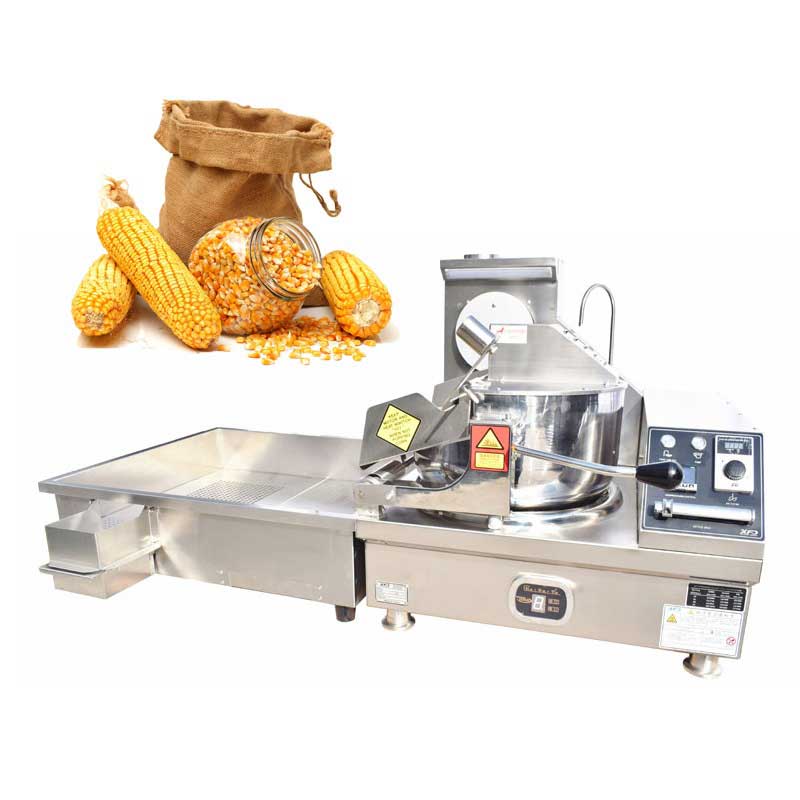
Popcorn becomes chewy when its crisp structure absorbs moisture or retains too much steam. During popping, moisture inside each corn kernel turns into steam, creating the pressure needed for the kernel to expand. After the kernel bursts, the expanded starch structure cools and becomes crisp.
However, popped corn is porous and can absorb moisture from the surrounding air. When water enters the expanded starch structure, the popcorn loses its brittle texture and becomes softer and harder to chew.
The most common causes include:
For commercial operators, the important point is that successful popping does not automatically guarantee a crisp finished product. Moisture management must continue after the popping cycle ends.
Steam is one of the first things to check when popcorn becomes chewy immediately after popping. Freshly popped kernels release hot vapor, especially when a large batch is discharged from a commercial kettle.
If the popcorn stays in a deep pile, sits on a surface with poor airflow, or is transferred directly into a closed container, the escaping steam may condense on cooler surfaces and return moisture to the popcorn. The result is a soft, less crunchy texture.
To reduce this problem, spread freshly popped popcorn in a shallow layer when practical and allow excess steam to escape. In commercial operations, prompt transfer to an appropriate holding or cooling area helps prevent moisture from accumulating around the product.
When choosing commercial popcorn machines, operators should also consider how the machine supports batch handling, ventilation, and the transfer of finished popcorn into the next stage of service.
Yes. Humidity is a major reason popcorn loses its crispness after popping. In humid environments, the difference between the moisture level of the popcorn and the surrounding air encourages moisture absorption.
This is particularly relevant to popcorn shops, cinemas, food factories, and businesses operating in warm or humid regions. Popcorn that remains crisp in a dry room may become soft much faster in a humid production or storage area.
To help protect the finished product:
For packaged snack manufacturers, crispness should be checked after cooling and packaging, not just immediately after popping. This helps identify whether the problem comes from production, the surrounding environment, or the packaging process.
Butter and seasonings can affect popcorn texture, but the result depends on the ingredients, application method, and storage conditions. Liquid toppings containing water can introduce additional moisture. Heavy coatings can also change the way the popcorn feels when bitten.
Dry seasoning powders are generally easier to apply without adding water, although the finished texture still depends on the formulation and coating process. Caramel and other sugar coatings require careful cooking and cooling because residual moisture, an unsuitable coating process, or humid storage can affect crispness.
For commercial flavored popcorn, it is important to distinguish between popcorn that is already chewy before seasoning and popcorn that becomes soft after coating. This simple check helps narrow down the cause.
If a business needs to apply caramel, chocolate, or powdered flavors consistently, an appropriate industrial popcorn production system can help coordinate popping and downstream processing. The actual equipment configuration should match the recipe, coating method, output requirements, and cooling process.
The most effective solution is to control moisture from the moment the popcorn leaves the kettle until it is served or sealed in its final package.
Do not leave freshly popped popcorn sitting in a deep, compact pile longer than necessary. Give the steam room to escape, and avoid transferring hot popcorn directly into a tightly closed container.
For cinemas and concession stands, a suitable popcorn holding cabinet helps maintain serving temperature and manage the display environment. However, heat alone does not guarantee crispness. Excessive heat can affect quality, while trapped steam can make popcorn soft. Follow the equipment manufacturer's instructions and check the actual holding conditions.
Businesses serving popcorn throughout the day can review XFD's commercial popcorn equipment range when evaluating the popping and serving setup together.
For packaged popcorn, allow the product to cool appropriately before sealing it. Packaging too early can trap residual heat and moisture, which may condense inside the package. The ideal cooling and packing sequence depends on the recipe, coating, production speed, and packaging material.
Use packaging designed to provide a suitable moisture barrier for the expected storage conditions. A package that looks sealed is not necessarily effective at preventing moisture from entering over time.
If popcorn is chewy as soon as it leaves the machine, investigate the raw kernels, ingredient ratios, cooking conditions, and the way the batch is discharged. Raw kernels with unsuitable moisture characteristics or inconsistent heating may produce results that vary from batch to batch.
For larger operations, a properly configured popcorn production line can help coordinate the stages of production. Equipment selection should be based on the required capacity and process, rather than assuming that a larger machine alone will solve texture problems.
When popcorn quality becomes inconsistent, checking when the texture changes is usually more useful than immediately changing the entire recipe.
| Observed problem | Possible cause | What to check |
|---|---|---|
| Chewy immediately after popping | Trapped steam or inconsistent popping | Batch depth, airflow, raw kernels, and cooking conditions |
| Crisp at first, soft later | Humidity or prolonged exposure to air | Storage, display time, and room humidity |
| Soft after packaging | Residual moisture or inadequate packaging barrier | Cooling time, seal integrity, and packaging material |
| Chewy after flavoring | Moisture from toppings or coating conditions | Recipe, coating application, and post-coating cooling |
| Different texture between batches | Variable ingredients or process settings | Kernel quality, ingredient ratios, and operating consistency |
A practical troubleshooting method is to compare three samples: popcorn immediately after popping, popcorn after holding, and popcorn after packaging. Record when the texture changes and check whether the same issue occurs across different batches. This helps the operator identify the stage that needs attention.
For a small concession stand, the main priorities may be reliable popping, convenient serving, and a suitable holding cabinet. For a food factory, the process may also involve continuous production, seasoning, coating, cooling, and packaging.
Equipment should be selected according to the expected output, product type, recipe, and handling requirements. A machine designed for fresh cinema popcorn does not necessarily provide the same functions as a complete industrial processing line.
XFD Popcorn offers equipment for commercial popcorn preparation as well as larger-scale production. Businesses evaluating equipment can review the available industrial popcorn machines and discuss their production requirements with the manufacturer.
The key is to treat crispness as a result of the entire process. Consistent popping, proper steam release, suitable holding conditions, controlled cooling, and appropriate packaging all contribute to a better finished product.
Popcorn usually becomes chewy because moisture is absorbed by the popped kernels or steam becomes trapped around them. Humidity, improper holding, wet toppings, and packaging before adequate cooling can all reduce crispness.
If the popcorn is only slightly soft, gentle reheating in an oven may help remove some moisture. Spread it in a single layer, use a low temperature, and monitor it closely to avoid burning. Results vary, and popcorn with heavy coatings may require extra care.
Yes. Popped corn absorbs moisture from humid air, which softens its expanded starch structure. Keep popcorn in a dry environment and use suitable moisture-resistant packaging for longer storage.
Popcorn can become soft if steam accumulates inside the cabinet, ventilation is restricted, or the holding conditions are unsuitable. Check airflow, cabinet cleanliness, temperature settings, and the equipment manufacturer's operating instructions.
Butter and other toppings can affect texture, especially when they introduce moisture or are applied heavily. The outcome depends on the formulation, application method, and how the popcorn is stored after seasoning.
Factories should control popping conditions, release excess steam, manage cooling, apply coatings consistently, and use packaging with an appropriate moisture barrier. Product testing at each processing stage helps identify where crispness is lost.
 No.58 TongMing Road,TongAn District,XiaMen City,FuJian Province
 +86-592-5701935
If you are interested in any XFD product, please leave us a message, we will reply to you soon.
Copyright © 2012-2026 XFD XIAMEN MACHINERY TECHNOLOGY LTD..All Rights Reserved.
 English
 Deutsch
 русский
 español
 português
 Nederlands
 العربية
 हिंदी
हिंदी