 English
 Deutsch
 русский
 español
 português
 Nederlands
 العربية
 हिंदी
हिंदी



Every moviegoer recognizes the intoxicating aroma of freshly popped corn the moment they step into a cinema lobby. Yet behind that golden, crunchy snack lies a sophisticated thermal and mechanical operation. For theater operators, snack food factories, and concession entrepreneurs, understanding how a commercial popcorn machine works is critical to maximizing kernel popping yield, minimizing waste, and ensuring long-term equipment profitability. Commercial popcorn machines operate far beyond simple home air-poppers—they are heavy-duty thermodynamic systems engineered for continuous, high-volume production. As a pioneer in concession processing solutions, XFD Popcorn Machinery has spent decades refining heating dynamics and automated kettle technology to help commercial operators achieve consistent gourmet quality batch after batch.
Key Takeaways: How Commercial Poppers Operate
- The Popping Physics: Commercial popping relies on heating moisture inside the kernel's endosperm until steam pressure hits roughly 135 psi (at 180°C / 356°F), triggering explosive pericarp rupture and starch expansion.
- The Three Essentials: Industrial machines combine uniform heat distribution (electric coil or electromagnetic induction), active motorized agitator paddles, and calibrated oil metering.
- Heat Transfer Technology: Modern commercial equipment is shifting toward induction heating for instant thermal response, lower energy consumption, and zero hot-spot scorch.
- Integrated Ecosystem: A true commercial setup balances the popping kettle with internal exhaust filtering, drop-shelf cornditioners, and heated storage compartments.
The Science Behind Popping: Thermodynamic Pressure Inside the Kernel
To appreciate how a machine functions mechanically, one must first examine what happens inside the corn kernel itself. Every popping kernel contains three basic components: the tough outer hull (pericarp), a hard starchy endosperm, and a small droplet of water (ideally 13.5% to 14.5% moisture content).
When the commercial machine applies thermal energy through cooking oil, heat transfers quickly through the kernel shell. As internal temperatures rise past 100°C (212°F), the moisture transforms into pressurized superheated steam. Because the pericarp is virtually non-porous, pressure builds up inside the chamber. Concurrently, the intense heat gelatinizes the compact starch granules into a molten, fluid state.
Once the internal temperature reaches approximately 180°C (356°F), internal pressure escalates to an astounding 135 to 140 psi (pounds per square inch). The hull ruptures violently. As the pressurized steam suddenly escapes into the atmospheric room pressure, the molten starch expands instantly into a foamy cellular structure, which cools within milliseconds into the airy, crispy corn puff consumers love.
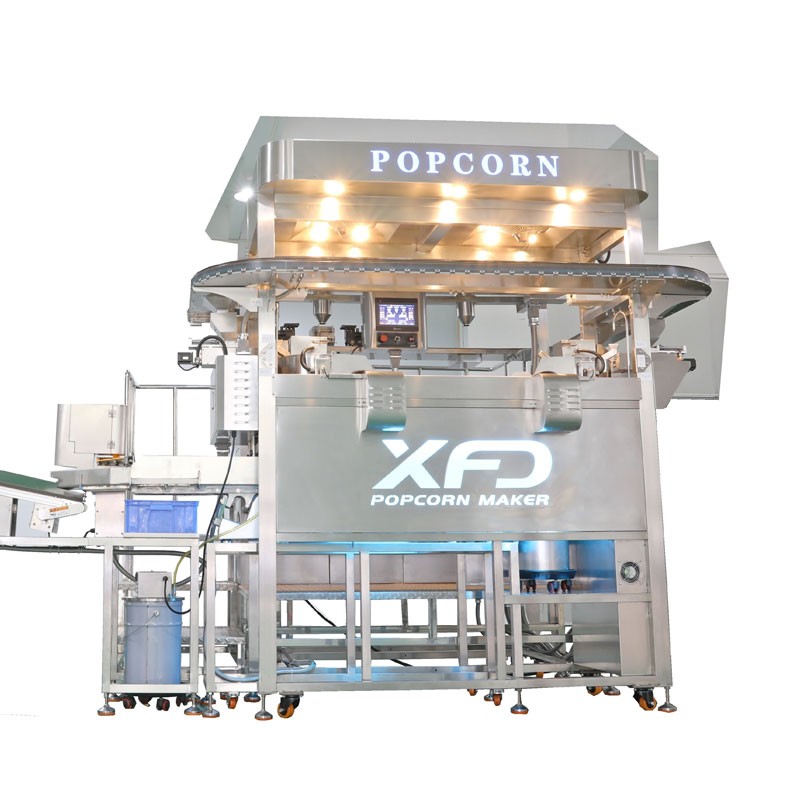
Core Components of a Commercial Popcorn Popper
Unlike basic domestic appliances, a heavy-duty popper features multiple mechanical, electrical, and pneumatic systems working in seamless synchronization.
| Component | Primary Function | Impact on Production |
|---|---|---|
| Stainless Steel Kettle | Suspended chamber where oil, seasoning, and corn undergo heat conversion. | Dictates batch capacity (e.g., 16 oz, 32 oz, 48 oz, or 52 oz) and heating efficiency. |
| Agitator Stirring Blade | Motor-driven rotating paddle that constantly sweeps the kettle floor. | Prevents sugar/oil burning, avoids hot spots, and ensures 98%+ popping rate. |
| Heating Elements (Coil or Induction) | Generates regulated thermal energy up to 200°C+. | Determines turnaround cycle speed between successive batches. |
| Automatic Oil Injection Pump | Doses exact volumes of coconut, vegetable, or butter oil directly into the pot. | Eliminates manual error, reduces labor hazard, and maintains taste consistency. |
| Perforated Drop Tray (Old Maid Sifter) | Screen base with precise hole apertures below the dumping station. | Filters unpopped kernels into a cleanable drawer, protecting customer teeth. |
Step-by-Step: The Complete Popping Process
Operating a high-performance commercial popper follows an engineered sequence designed to safeguard both product texture and kitchen personnel.
Step 1: Kettle Preheating & Oil Dosing
The machine operator turns on the master kettle power. Advanced commercial setups utilize automated oil pumps that draw preheated liquid popping oil (often solid coconut oil melted by an internal hot rod) and inject an exact ratio directly into the kettle. Running popping oil at correct thermal levels creates immediate heat conductivity across every kernel surface.
Step 2: Adding Kernels and Flavorings
Once the kettle reaches operating temperature (typically monitored by an electronic digital thermostat), the operator introduces raw corn kernels—either butterfly style for light concessions or mushroom style for candy glazing. Specialized glaze sugars or seasoning salts are added simultaneously.
Step 3: Continuous Agitation and Heat Transfer
The mechanical agitator rotates constantly across the bottom of the kettle. This movement is paramount: without continual sweeping, sugar quickly caramelizes into black carbon, and oil burns. The agitator ensures each kernel stays coated in boiling oil while absorbing balanced conduction heat.
Step 4: Continuous Ejection and Steam Venting
As pressure cascades across thousands of kernels, pop-corn volume expands by 35 to 44 times original kernel size. The expanding mass pushes open the balanced, spring-loaded kettle lids. Popped corn gently overflows over the kettle brim and falls straight onto the perforated stainless steel warmer deck below.
Step 5: Dumping and Batch Turnover
When popping slows to 1–2 seconds between pops, the operator pulls the kettle dump handle (or presses an automated dump switch on automated models) to invert the kettle, clearing out remaining popped corn and avoiding burnt leftovers.
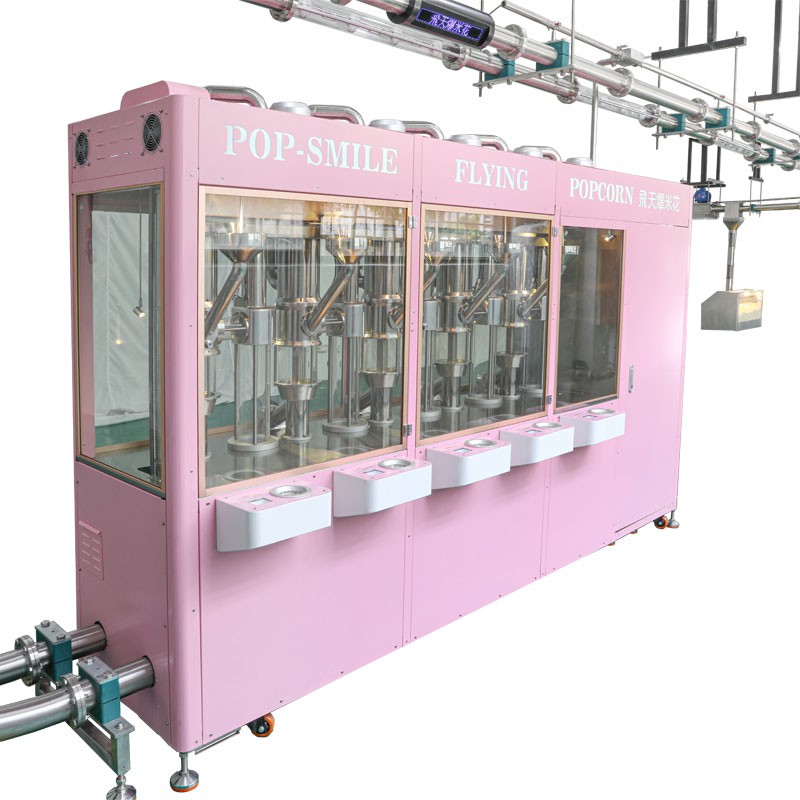
Traditional Resistance Heating vs. Modern Electromagnetic Induction
While standard equipment relies on conventional resistance heating tubes clamped underneath aluminum or cast iron plates, the industry standard for high-throughput venues has evolved toward commercial popcorn machines equipped with electromagnetic induction.
Induction poppers generate an alternating magnetic field that directly excites iron molecules in the kettle wall itself, creating instantaneous heat from within the metal rather than waiting for conduction coils. This brings three substantial operational breakthroughs:
- Unmatched Thermal Precision: Induction responds within milliseconds to micro-controller adjustments. When sugar-heavy glazes are introduced, temperature drops can be countered instantly without burning delicate flavorings.
- Energy Conservation: Conventional poppers radiate immense waste heat into concession rooms, driving up air conditioning costs. Induction units concentrate more than 90% of electrical energy directly into the popping zone.
- Batch Turnaround Speed: Cycle intervals drop by up to 25% compared to tubular heating elements, allowing cinemas to satisfy long lines during pre-movie peak rush hours.
For large-scale processing facilities, this induction philosophy scales into multi-kettle continuous setups, such as an industrial popcorn machine designed to deliver continuous automated batch discharge with zero operator intervention.
Preserving Quality: The Vital Role of Staging Cabinets
Popping the corn is only half the battle; maintaining its crispness over several hours of concession holding is equally vital. Freshly popped corn naturally expels moisture as it cools. If stored in a closed box without air circulation, that steam reabsorbs into the starch matrix, turning crisp popcorn chewy and stale within 20 minutes.
High-end concession environments prevent this by feeding poppers directly into a dedicated popcorn staging cabinet. Known within the industry as "cornditioners," these units push continuous gentle circulating warm dry air through the perforated floor. The rising warm air strips away ambient moisture while holding the popcorn at the ideal serving temperature (around 50°C to 60°C / 120°F to 140°F) for hours without drying out flavor oils.
Frequently Asked Questions (FAQ)
Why does a commercial popcorn machine require oil?
Cooking oil acts as a rapid thermal conductor. Air alone conducts heat poorly and unevenly. Liquid oil encapsulates each kernel, transferring heat across 100% of the pericarp simultaneously to guarantee synchronized popping pressure while infusing buttery taste and adhering salt.
What causes popcorn kernels to burn inside commercial kettles?
Kettle burns typically result from two primary faults: a malfunctioning stirring agitator that leaves kernels stationary against the hot floor, or delayed batch dumping after popping frequency drops. Regular carbon cleaning of kettle walls is essential to maintain heat transfer without burnt deposits.
What is the difference between butterfly and mushroom popcorn kernels in machines?
Butterfly corn pops with irregular wings and crevices, making it tender and ideal for light theater seasoning. Mushroom corn expands into dense, spherical balls that withstand heavy coating processes like caramel, cheese, and chocolate glaze without shattering.
How often should commercial popcorn popper kettles be cleaned?
Wiping the kettle clean after every shift is mandatory to avoid grease polymer formation. Deep sanitization using food-grade kettle cleaners should occur weekly, dissolving baked-on carbon films and preserving food safety compliance.


